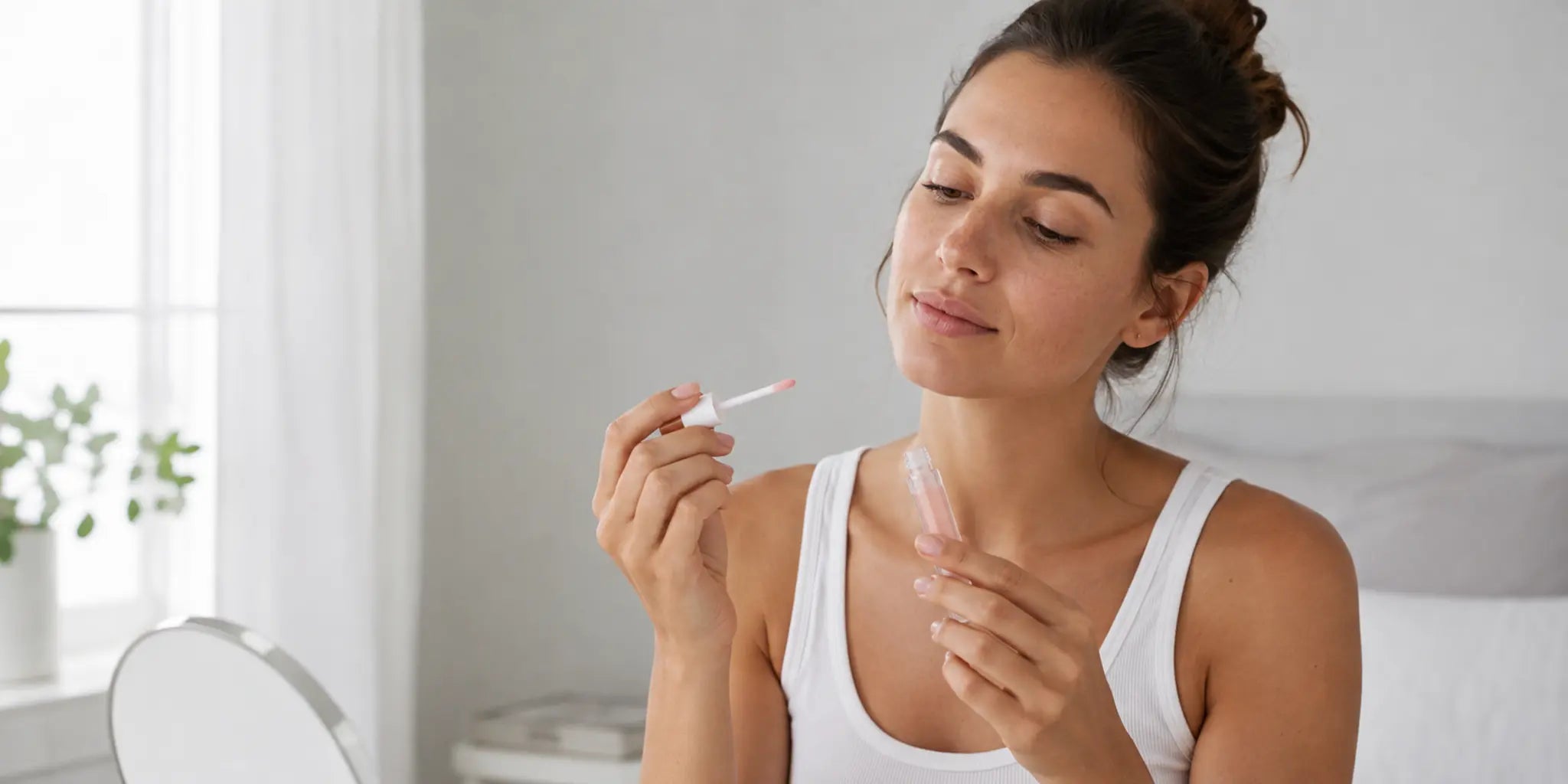




After eating or drinking, check your lips first, gently blot away food or excess surface oil if needed, then reapply a thin, even layer of lip oil to clean, dry lips. You do not need to remove every trace or automatically add another full coat. A quick assessment helps you refresh the finish without creating heavy buildup.
Key Takeaways
- Reapply only when the finish has faded or your lips feel like they need another layer.
- After a meal, blot gently instead of scrubbing your lips.
- Use clean hands and keep the applicator and container clean.
- A thin coat is usually easier to control than repeatedly stacking thick layers.
- Stop using a lip product if it burns, stings, or feels uncomfortable.
Do You Need to Reapply Lip Oil After Every Meal?
No. Lip oil can transfer to a cup, napkin, or food, but the amount left behind varies with the product, what you ate, and how much you applied. Look in a mirror and decide whether you want to refresh the shine, color, or comfortable feel. If the finish still looks even, you can leave it alone.
This matters especially with a tinted formula. Adding more without checking can concentrate color at the center of the lips or around the lip line. A light-handed refresh gives you more control and makes it easier to keep the result even.
| What happened | What to check | Practical next step |
|---|---|---|
| You drank water | Whether the shine still looks even | Leave it or add one light pass if desired |
| You had coffee or another drink | Transfer at the center and rim of the lips | Blot lightly, then smooth on a thin layer |
| You finished a meal | Food residue, uneven color, or excess surface oil | Clean your hands, blot gently, and reapply only as needed |
| You are wearing liner or lipstick underneath | Whether the base color has shifted | Tidy the base first, then apply lip oil without dragging it beyond the lip line |

How to Reapply Lip Oil After Eating or Drinking
Step 01
Check What Is Still on Your Lips
Use a mirror in natural or neutral light. Check the center, corners, and lip line. If you are wearing a tinted lip oil, notice whether the color is still balanced before adding more. This ten-second check prevents an automatic layer that you may not need.
Step 02
Blot Gently Instead of Scrubbing
Press a clean napkin lightly against the lips to pick up crumbs, moisture, or excess surface oil. Avoid rubbing back and forth. The American Academy of Dermatology also advises against licking, biting, or picking at lips as part of everyday lip care.
Step 03
Start With Clean Hands
If you need to touch your lip line or handle a cap, clean hands make the routine more practical. The CDC recommends washing hands with soap and water and using a hand sanitizer with at least 60% alcohol when soap and water are not available. Let sanitizer dry before touching your face or product packaging.
Step 04
Apply One Thin, Even Layer
Glide the applicator across clean, dry lips, starting near the center and moving outward with a light hand. One controlled pass is easier to assess than several thick coats. Give the layer a moment to settle, then check the edges before deciding whether you want any more.
For a current nooni example, nooni Appleberry Lip Oil is a 3.7 mL (0.12 fl oz) tinted lip oil. Its official directions say to apply evenly to clean, dry lips with the applicator tip and reapply as needed. Always follow the current label and directions on your own product.

Step 05
Close and Store the Product Properly
Return the applicator to the tube without setting it on a table or napkin, and close the cap securely. The FDA recommends keeping cosmetic containers clean and tightly closed and not sharing makeup. The agency also advises protecting cosmetics from temperature extremes.
How to Keep a Lip Oil Touch-Up Hygienic
A doe-foot applicator goes back into the container after each use, so small habits matter. Do not share the product, do not add water to change the texture, and avoid placing the applicator directly on a cafe table or other surface. If the applicator touches food residue, wipe your lips first rather than repeatedly dipping back into the tube.
The FDA notes in its cosmetics shelf-life guidance that applicators are exposed to microorganisms each time they are used. It recommends keeping containers and applicators clean, storing products properly, and discarding cosmetics if their color or smell changes. A hot car is also a poor storage spot because heat can affect a cosmetic product.
What If You Are Layering Lip Oil Over Lipstick?
First check the lipstick or liner underneath. If the base has moved beyond the lip line or faded unevenly, tidy that layer before adding lip oil. Apply the oil with a light touch so you do not pull the base color around. For a fuller layering routine, see Lip Liner or Lip Oil First?
If you are choosing between textures rather than layering them, Lip Oil vs Lip Balm explains the practical differences in finish and use. For a special-event color idea, the National Lipstick Day lip oil looks guide shows several ways to coordinate shine and color without requiring a heavy touch-up.
When to Skip the Touch-Up
Do not keep layering a product that burns, stings, or feels uncomfortable. Remove it gently, review the label, and discontinue use if irritation occurs. The American Academy of Dermatology's lip care guidance says that burning, stinging, or tingling means a product is irritating your lips rather than simply “working.”
You should also pause before reapplying if the formula smells different, the color has changed unexpectedly, or the applicator or tube appears damaged. Cosmetics do not all share one universal replacement schedule, so consult the label, the period-after-opening symbol when present, and the manufacturer's current directions. The FDA Cosmetics Labeling Guide explains the basic information consumers can expect on cosmetic labels.
Bottom Line
A good post-meal lip oil touch-up is simple: check what remains, blot gently if needed, clean your hands, and add one thin, even layer to clean, dry lips. Reapply for the finish you want, not because every drink or meal automatically requires another coat. Keep the applicator clean, close the container securely, and stop using the product if it feels uncomfortable or changes unexpectedly.
Sources
- U.S. Food and Drug Administration: Using Cosmetics Safely
- U.S. Food and Drug Administration: Cosmetics Shelf Life and Expiration Dating
- U.S. Food and Drug Administration: Cosmetics Labeling Guide
- Centers for Disease Control and Prevention: About Hand Hygiene
- American Academy of Dermatology: Everyday Lip Care Tips
Related Reading
- Does Lip Oil Expire? How to Store It and Know When to Replace It
- Lip Liner or Lip Oil First? A Step-by-Step Layering Guide
- Does Lip Oil Have SPF? A Daytime Lip-Layering Guide
Frequently Asked Questions
Select a question to view the answer.
Should you reapply lip oil after eating?
Only if you want to refresh the finish or the existing layer looks uneven. Check your lips, gently blot away food or excess surface oil if needed, and apply a thin layer to clean, dry lips.
Do you need to remove old lip oil before reapplying?
Not necessarily. If the remaining layer is clean and even, you can add a light pass. If there is food residue, uneven pigment, or heavy buildup, gently blot first.
How much lip oil should you reapply?
Start with one thin, even layer and check the result before adding more. Follow the directions on the current product label because applicators and formulas vary.
Can you share lip oil with someone else?
No. The FDA advises against sharing makeup. Keep the applicator and container clean, close the cap securely, and use only your own product.
When should you stop using a lip oil?
Stop if it burns, stings, feels uncomfortable, or causes irritation. Also discontinue use if the product develops an unexpected change in color or smell, and review the label and manufacturer directions.
Product & Skin Notice
This article is for general informational purposes only. Individual skin types, sensitivities, and results may vary. Always review the product label, ingredient list, directions, and warnings before use. Discontinue use if irritation occurs, and consult a qualified healthcare professional if you have an existing skin condition, known allergies, or persistent concerns.