


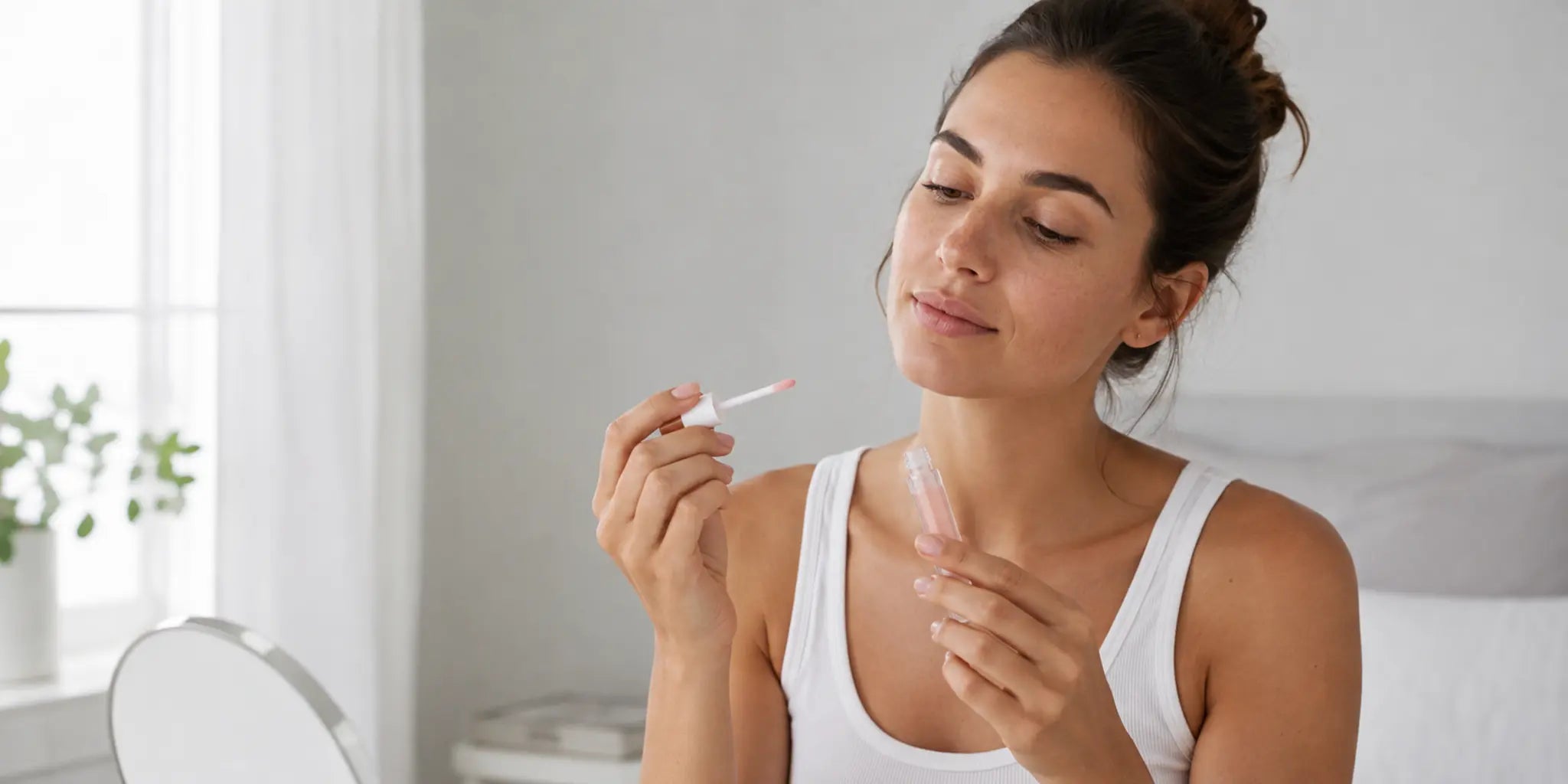
To keep a built-in lip oil applicator clean, start with clean, dry hands and lips, keep the wand away from counters and food, wipe only the outside of the tube when needed, close the cap securely, and do not share the product. Do not rinse the wand or apply alcohol to it and return it to the tube unless the manufacturer specifically tells you to do so. Adding water or another substance can change the formula and introduce material the product was not designed to contain.
Key Takeaways
- Clean hands and clean, dry lips are the best starting point for every application.
- Keep the wand off tables, napkins, phones, and other shared surfaces.
- Wipe residue from the outside rim with a clean, dry tissue; do not push tissue into the opening.
- Do not share lip oil, add water, or return a wet wand or one wiped with alcohol to the tube.
- Close the cap tightly and replace the product if its smell, color, or texture changes unexpectedly.
Should You Wash a Built-In Lip Oil Applicator?
Usually, no. A built-in doe-foot wand is part of a closed cosmetic package: the applicator leaves the tube, touches the lips, and goes back into the formula. Washing it under a faucet creates a new problem because moisture may travel down the stem or return to the tube. The FDA's cosmetics shelf-life guidance advises consumers not to add water to cosmetics and to keep containers and applicators clean.
Rubbing alcohol is not a universal at-home solution either. A quick wipe does not establish that the applicator or the product inside is sanitized, and alcohol can affect some materials or formulas. Unless the current product label or manufacturer provides a cleaning method, focus on clean use and proper storage rather than experimenting with the wand.
| Situation | Practical action | What to avoid |
|---|---|---|
| Product collects around the tube neck | Close the tube, then wipe the outside rim and cap threads with a clean, dry tissue | Pushing tissue, cotton, or tools into the opening |
| The wand touches a counter or floor | Do not return it to the tube; check the brand's directions or replace the product | Rinsing the wand and putting it back while wet |
| Someone else uses your lip oil | Stop sharing it and consider replacing it | Assuming a surface wipe cleans the formula inside |
| The smell, color, or texture changes | Stop using the product and review the label | Diluting or mixing the formula to restore it |

How to Keep Your Lip Oil Applicator Clean
Step 01
Wash and Dry Your Hands
Clean hands matter because you handle the cap and tube before and after application. The CDC recommends washing hands with soap and water. When that is not available, it recommends a hand sanitizer containing at least 60% alcohol. Let your hands dry fully before touching your lips or the package.
Step 02
Start With Clean, Dry Lips
Remove crumbs, drink residue, or excess surface product with a clean tissue. Blot gently instead of scrubbing. If your lips burn, sting, or feel uncomfortable with a product, stop using it rather than adding another layer. The American Academy of Dermatology's everyday lip care tips note that burning, stinging, or tingling signals irritation.
Step 03
Keep the Wand Off Surfaces
Pull the wand out only when you are ready to apply. Do not set it on a vanity, restaurant table, napkin, phone, or cosmetic bag. If you need to pause, hold the wand by its cap without touching the applicator tip. Avoid touching the tip with your fingers, even when your hands are clean.
Step 04
Use a Controlled Application
Apply directly to clean, dry lips and return the wand to the tube promptly. One intentional pass is easier to manage than repeatedly moving the wand between your lips, fingers, and nearby objects. For a current nooni example, nooni Appleberry Lip Oil is an active 3.7 mL (0.12 fl oz) tinted lip oil with a pointed doe-foot applicator. Its official directions say to apply evenly to clean, dry lips using the applicator tip and reapply as needed. Follow the current label on the product you own.
Step 05
Close and Store It Properly
Return the wand without touching the tube neck more than necessary, then twist the cap until it is secure. The FDA recommends keeping cosmetic containers clean and tightly closed, keeping makeup away from temperature extremes, and not sharing it. A cool, dry drawer or cosmetics pouch is generally more suitable than a sunny windowsill or hot car.

What If the Wand Touches a Counter or Food?
Do not put a visibly contaminated wand back into the tube. A home rinse or alcohol wipe cannot confirm that the applicator is suitable to return to the formula. Check the manufacturer's current instructions or customer-care guidance; if there is no product-specific method, replacing the item is the cautious practical choice.
If the wand brushes against food while you are applying after a meal, stop and assess it before redipping. For a cleaner touch-up routine, blot your lips first and follow the sequence in How to Reapply Lip Oil After Eating and Drinking.
Why Sharing Lip Oil Is Different From Sharing the Shade Name
A shade recommendation can be shared; a personal applicator should not be. The FDA advises against sharing makeup. A 2025 study of shared lip cosmetic testers also found microbial contamination in the specific testers it sampled. That finding does not describe every personal lip product, but it supports viewing communal testers and personal wands as different things. Read the published lip cosmetic tester study for its methods and limits.
At a store, use a disposable applicator if the retailer provides one and follow the retailer's sampling process. Do not apply a communal tester directly to your lips. At home, label similar tubes if roommates or family members might confuse them.
When Is It Time to Replace Your Lip Oil?
There is no single universal replacement date for every cosmetic. Check the current label and any period-after-opening symbol, and pay attention to unexpected changes in color, smell, texture, or packaging. Stop using a product that causes irritation or has a damaged container. Do not add water or mix in another product to change a formula that has thickened.
For a fuller decision guide, see Does Lip Oil Expire? How to Store It and Know When to Replace It. If you are deciding which everyday texture fits your routine, Lip Oil vs Lip Balm compares their practical roles and finishes.
Bottom Line
Keeping a lip oil applicator clean is mostly about controlling what it touches: clean and dry your hands, start with clean and dry lips, keep the wand off surfaces, do not share it, and close the package promptly. Clean residue from the outside of the container with a dry tissue when necessary. Unless the manufacturer expressly directs otherwise, do not return a rinsed or wet wand, or one wiped with alcohol, to the tube.
Sources
- U.S. Food and Drug Administration: Using Cosmetics Safely
- U.S. Food and Drug Administration: Cosmetics Shelf Life and Expiration Dating
- Centers for Disease Control and Prevention: About Hand Hygiene
- American Academy of Dermatology: Everyday Lip Care Tips
- Microbiological Study of Shared Lip Cosmetic Testers
Related Reading
- Does Lip Oil Expire? How to Store It and Know When to Replace It
- How to Reapply Lip Oil After Eating and Drinking
- Lip Oil vs Lip Balm: Which One Is Right for You?
Frequently Asked Questions
Select a question to view the answer.
Should you wash a lip oil applicator with water?
Do not rinse a built-in wand and return it to the tube unless the manufacturer specifically directs you to do so. Water can enter the package or change a formula that was not designed to contain added water.
Can you use rubbing alcohol on a lip oil applicator?
Do not apply alcohol to a built-in wand and return it to the tube unless the manufacturer provides that instruction. A home wipe does not confirm that the applicator or formula inside is sanitized, and alcohol may affect some materials or formulas.
What should you do if the wand touches a counter?
Do not return a visibly contaminated wand to the tube. Check the manufacturer's product-specific directions or customer-care guidance. If no safe cleaning method is provided, replacing the product is the cautious practical choice.
Can you share lip oil?
No. The FDA advises against sharing makeup. Keep lip oil as a personal product and use a disposable applicator when sampling a tester according to the retailer's process.
When should you replace a lip oil?
Follow the current label and any period-after-opening symbol. Stop using the product if its color, smell, or texture changes unexpectedly, the package is damaged, or it causes irritation.
Product & Skin Notice
This article is for general informational purposes only. Individual skin types, sensitivities, and results may vary. Always review the product label, ingredient list, directions, and warnings before use. Discontinue use if irritation occurs, and consult a qualified healthcare professional if you have an existing skin condition, known allergies, or persistent concerns.