



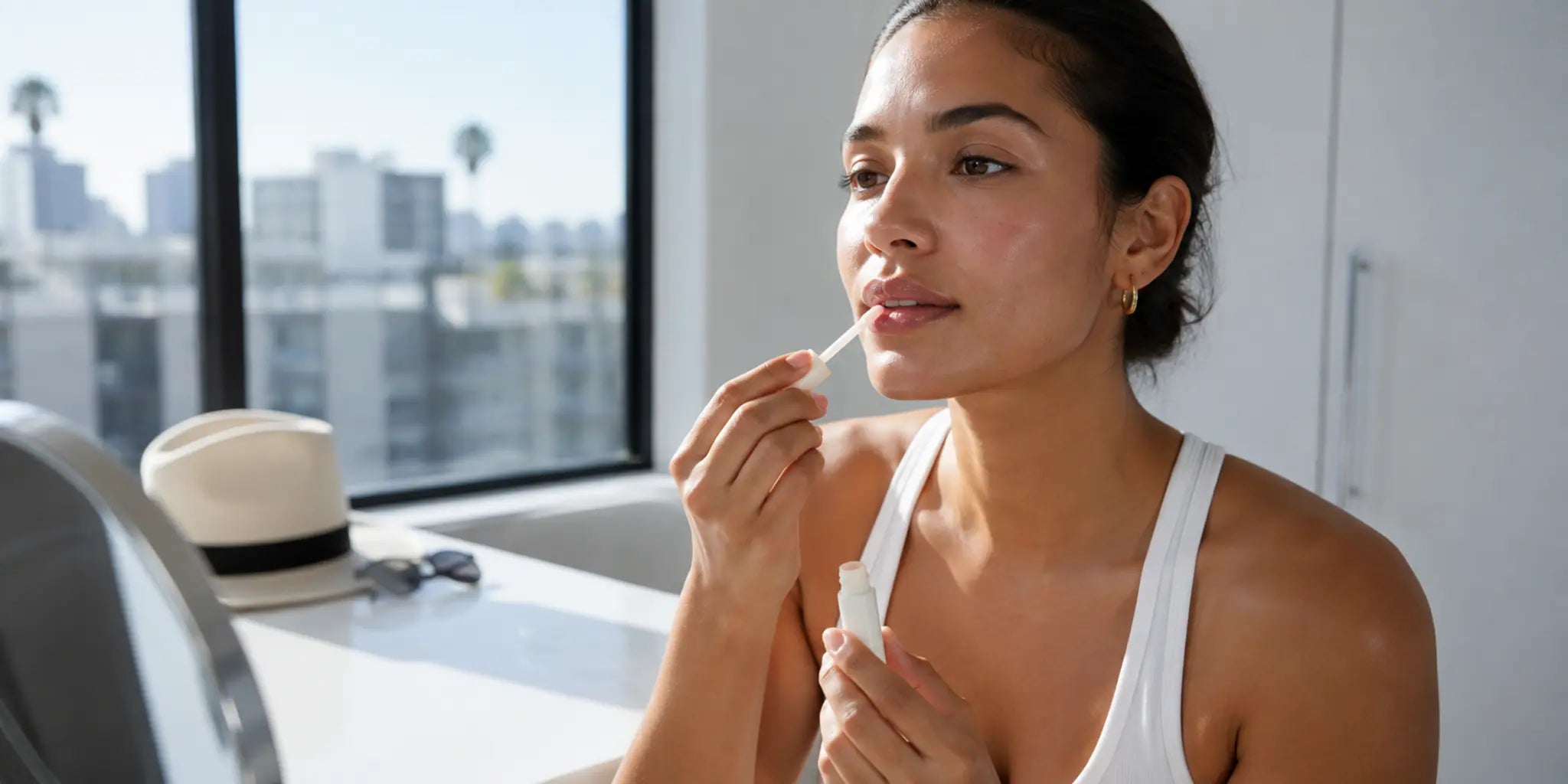
Does Lip Oil Have SPF? A Daytime Lip-Layering Guide
DAYTIME LIP-CARE GUIDE
Most lip oils are cosmetic products, not sun-protection products. Unless the label states an SPF value and gives sunscreen directions, use a labeled SPF lip balm first and add lip oil only as the glossy finishing layer.
Lip oil can add shine, tint, and a comfortable feel, but a glossy finish does not tell you whether a formula provides sun protection. In the United States, a lip product making an SPF claim must be labeled for that purpose. If your lip oil has no SPF value or sunscreen directions, do not count it as your daytime lip protection.
Key Takeaways
- Do not assume a lip oil has SPF because it looks glossy or contains plant oils.
- Look for an explicit SPF value and sunscreen directions on the current product label.
- The American Academy of Dermatology recommends an SPF 30 or higher lip balm for time outdoors.
- When layering, apply the labeled SPF lip product first and use a small amount of lip oil as the cosmetic finish.
- Reapply the SPF product according to its label; the lip oil does not extend that schedule.
Does Lip Oil Have SPF?
Some lip products include sunscreen, but the product name “lip oil” does not automatically mean SPF. The U.S. Food and Drug Administration explains that makeup products displaying sunscreen claims, including SPF numbers, are regulated as both cosmetics and drugs. The useful shopping rule is simple: the protection must be stated on the label.
A formula can feel moisturizing, contain botanical oils, or leave a reflective finish without being labeled for sun protection. Those qualities describe texture and appearance; they do not establish an SPF value. If you cannot find an SPF number, broad-spectrum wording, and use directions, consider the product regular lip color or care.
The AAD advises using a lip balm with SPF 30 or higher when going outdoors. FDA consumer guidance also identifies the lips as an often-missed area and recommends an SPF lip balm. This is a separate job from adding shine with a tinted lip oil.
How to Check a Lip Product for Sun Protection
| What you see | What it means for your routine |
|---|---|
| SPF 30 or higher plus sunscreen directions | Use it as the protective lip step and follow the label exactly. |
| Broad-spectrum wording | The label indicates coverage for both UVA and UVB exposure. |
| Glossy, hydrating, or oil-based wording only | These are cosmetic or feel-related descriptions, not proof of SPF. |
| No SPF number or sunscreen directions | Add a separate labeled SPF lip balm before the cosmetic product. |
Check the package you are actually using rather than relying on a social post, an old review, or a similar product name. Formulas and labeling can change, and two shades or versions in the same category may not have identical directions.
How to Layer SPF Lip Balm and Lip Oil
Step 01 — Start with clean, dry lips
Gently remove leftover color, food, or a heavy overnight product. Avoid scrubbing. If your lips feel uncomfortable or visibly irritated, simplify the routine and skip optional color or shine until they feel settled.
Step 02 — Apply the labeled SPF lip product
Cover the exposed lip surface using the amount and timing stated on the product label. The AAD recommends SPF 30 or higher for lips. Do not rely on a thin trace left from earlier in the day.

Step 03 — Follow the label before adding another layer
If the SPF product tells you to apply it a certain number of minutes before sun exposure, follow that direction. Avoid aggressively rubbing the next product across the lips, which can move the base layer around.
Step 04 — Add a small amount of lip oil
Use the applicator to place a light layer of clear or tinted lip oil over the base. One even pass is usually enough for a glossy finish. For more ideas on choosing between textures, compare lip oil and lip gloss.

Step 05 — Prioritize SPF reapplication
The AAD advises reapplying sunscreen about every two hours outdoors and after swimming or sweating, while following the product directions. Eating, drinking, and wiping the lips can also remove lip products. When it is time to reapply, refresh the labeled SPF product first; add more lip oil afterward only if you still want the finish.
A Simple Daytime Lip Routine by Situation
| Situation | Suggested order |
|---|---|
| Outdoor commute or lunch | SPF lip balm, then a light lip-oil layer |
| Beach, pool, or extended outdoor time | Follow the SPF lip product directions and keep reapplication easy; keep lip oil optional |
| Mostly indoors near windows | Keep the same label-led routine if daylight exposure is part of your day |
| Evening event after sunset | Choose lip oil for color and shine based on the look you want |
Where a Clear nooni Lip Oil Fits
The current official page for nooni Appleclear Lip Oil lists a 3.7 ml clear lip oil with apple seed oil, hyaluronic acid, and jojoba seed oil. Its directions say to apply it evenly to clean, dry lips using the applicator. The current page does not state an SPF value or provide sunscreen directions, so use it for its clear glossy finish—not as a substitute for a labeled SPF lip product.
If you want to explore clear and tinted finishes after choosing your protective base, browse the nooni lip oil collection.
Common Daytime Lip-Layering Mistakes
- Assuming shine equals SPF: A reflective finish is not a labeled sun-protection claim.
- Checking ingredients but not directions: Plant oils and moisturizing ingredients do not provide a verified SPF number by themselves.
- Applying only once in the morning: Follow the SPF product’s reapplication directions throughout outdoor time.
- Using too much finishing oil: A heavy top layer can feel messy and makes SPF refreshes less convenient.
- Trusting an old product description: Review the current package and official product page each time you replace the item.
The Bottom Line
Most ordinary lip oils should be considered cosmetic shine, tint, or comfort products unless their current label clearly states an SPF value and sunscreen directions. For daytime, begin with a labeled SPF 30 or higher lip product, follow its directions, and add a small amount of lip oil afterward. When reapplication is due, refresh the SPF step first.
Sources
- American Academy of Dermatology: How to Apply Sunscreen
- American Academy of Dermatology: Sunscreen FAQs
- American Academy of Dermatology: Tips for Dry, Chapped Lips
- U.S. Food and Drug Administration: Sunscreen and Sun Protection
- U.S. Food and Drug Administration: Makeup Products With Sunscreen Claims
- Vogue: 2026 Lip Trends
Frequently Asked Questions
Select a question to view the answer.
Does lip oil protect your lips from the sun?
Only when the current label states an SPF value and provides sunscreen directions. A standard glossy lip oil without those elements should be considered a cosmetic finish, not sun protection.
Can you put lip oil over SPF lip balm?
Yes, when the SPF product’s directions allow your routine to continue. Apply the labeled SPF lip balm first, avoid rubbing it away, and add a light lip-oil layer for shine or tint.
Should SPF lip balm go before or after lip oil?
Apply the SPF lip balm first so you can follow its coverage and timing directions. Lip oil comes afterward as the optional cosmetic layer.
How often should you reapply SPF lip balm?
Follow the product label. The American Academy of Dermatology generally advises reapplying sunscreen about every two hours outdoors and after swimming or sweating.
Does nooni Appleclear Lip Oil contain SPF?
The current official nooni Appleclear Lip Oil page does not list an SPF value or sunscreen directions. Use a separate labeled SPF lip product for daytime sun protection and Appleclear for its clear glossy finish.
Product & Skin Notice
This article is for general informational purposes only. Individual skin types, sensitivities, and results may vary. Always review the product label, ingredient list, directions, and warnings before use. Discontinue use if irritation occurs, and consult a qualified healthcare professional if you have an existing skin condition, known allergies, or persistent concerns.
Read more
Learn how to remove sunscreen at night with a gentle one- or two-step cleanse, when cleansing oil helps, and how to avoid over-cleansing.

Learn when to wash your face before and after a workout, how to remove makeup and sweat gently, and when one simple cleanse is enough for your skin.