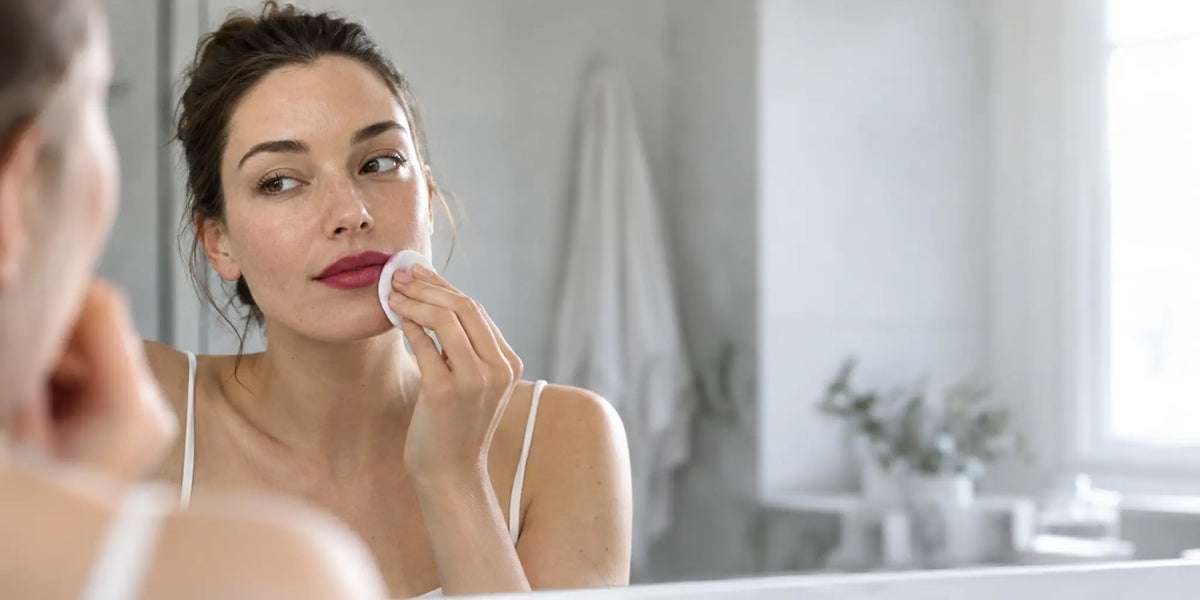



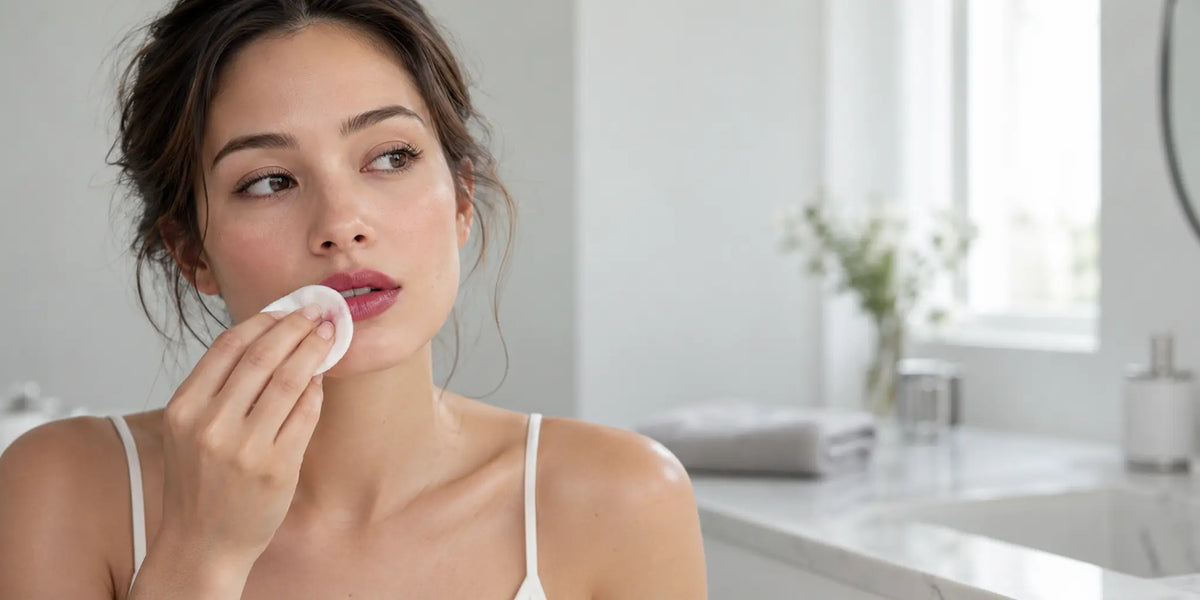
Yes—you can remove frosted lipstick without scrubbing. First blot away loose color, then press a remover that your lipstick label allows onto closed lips for several seconds. Wipe in short, gentle passes, use a fresh section of the pad, and inspect in bright light. The pause matters more than pressure: it gives the formula time to loosen the color and pearlescent film so you do not chase every reflective speck with repeated rubbing.
Frosted lips are back in the spotlight. Recent beauty coverage has highlighted a broader return to dramatic lipstick and a renewed interest in pearly, metallic finishes. That makes a residue-aware removal routine useful again—especially because light-catching particles can remain visible after the main color seems gone.
Key Takeaways
- Blot first so you remove surface color before adding more liquid.
- Press and pause; do not saw the pad back and forth.
- Use the lipstick label to choose a compatible remover.
- Check the lip line, corners, and the area just below the lower lip in direct light.
Why Frosted Lipstick Can Leave a Pearly Film
Frosted lipstick is a finish, not one single formula. A product may combine color with pearl-like pigments, fine reflective particles, waxes, oils, or film-forming ingredients. The color and sheen do not always lift at the same rate. A first pass may remove most of the berry, mauve, or nude base while a faint silver, gold, or pink cast remains around the lip line.
This is also why a stronger swipe is not automatically a better swipe. Pressure can move shimmer onto nearby skin, while repeated rubbing can make lips feel uncomfortable. The better approach is controlled contact, clean sections of the pad, and a final light check.
| What you notice | Likely situation | Gentle next step |
|---|---|---|
| Strong color transfer | Loose surface pigment remains | Blot once, then use a fresh pad |
| Color is gone but lips still reflect light | A thin pearlescent film remains | Press remover briefly, then wipe once |
| Shimmer sits outside the lip line | Residue has shifted onto nearby skin | Use a clean corner of the pad only on that area |
| Lips begin to feel uncomfortable | Too many passes or an unsuitable product | Stop, rinse as directed, and reassess |
How to Remove Frosted Lipstick Step by Step
Step 01 — Read the Lipstick and Remover Labels
Start with the product instructions. The FDA advises consumers to read cosmetic labels and follow directions and warnings. If your lipstick brand specifies a remover type, use that guidance. Do not assume that every oil, balm, micellar water, or face cleanser belongs on the lips; use only a product labeled for that area and keep it out of the mouth.
Step 02 — Blot the Surface Once
Press a clean tissue gently between closed lips. Do not drag it sideways. This takes down the surface layer and helps prevent a wet remover from spreading pigment beyond the lip line. One controlled blot is enough; the goal is preparation, not total removal.

Step 03 — Press, Pause, and Lift
Place the saturated pad over closed lips and hold it still for several seconds. Lift it away, fold to a clean section, and make one short pass from the outer corner toward the center. Repeat on the other side with a clean section. Avoid sweeping back and forth across the full mouth.
If the lipstick is transfer-resistant, give the remover another brief contact period instead of increasing pressure. Formula compatibility matters, so stop if the label directions are unclear or the product causes burning or stinging. The American Academy of Dermatology advises avoiding lip products that burn, sting, or tingle.
Step 04 — Clean the Lip Line Precisely
Wrap a fresh pad section around one fingertip and trace the outer lip line with very light pressure. Pay attention to the corners of the mouth and the shallow curve under the lower lip, where pearly residue can collect. Keep the pad on the skin surface rather than inside the mouth.
Step 05 — Check in Direct, Neutral Light
Turn toward a window or neutral white light. Tilt your face slightly rather than rubbing the lips to test them. If you see one reflective patch, touch only that spot with a clean, lightly dampened section of the pad. A targeted final pass is usually more efficient than repeating the entire routine.

Step 06 — Finish Simply
If the remover label says to rinse, use lukewarm water and pat dry with a soft towel. The AAD recommends lukewarm water, fingertips, and gentle drying for facial cleansing; those same low-friction habits are helpful around the mouth. If your lips feel comfortable, there is no need to keep cleansing until they feel completely bare.
What Not to Do
- Do not use a face scrub on the lips. Reflective residue calls for a clean pad and a compatible remover, not more friction.
- Do not pick at visible particles. Recheck under neutral light and lift them with a fresh section of the pad.
- Do not improvise with household products. Use cosmetics labeled for the intended area.
- Do not keep going through discomfort. Stop if a product burns or stings, and follow its label.
If You Are Also Removing Face Makeup
Complete the lip-specific steps first so the shimmer stays localized. Then remove the rest of your makeup according to each product label. For the face and eye area—not as a lip-specific remover—nooni Snow Aqua 0 LHA Toning Cleansing Oil is currently listed as a 200 ml / 6.76 fl oz cleansing oil. Its directions call for dry hands and a dry face, gentle massage, water to emulsify, and a thorough lukewarm-water rinse. The official page does not identify it as a lip product, so this article does not recommend using it on the lips or inside the mouth.
After the face is clean, pat rather than rub. If you notice shimmer on a towel, return to the specific spot with a clean damp pad instead of washing the full face again.
How to Make Tomorrow's Removal Easier
Application choices can simplify the evening routine. Keep frosted lipstick inside a crisp lip line, blot excess after the first layer, and avoid layering several incompatible textures without checking their instructions. A lighter, even layer is easier to assess than a thick stack of color, gloss, and shimmer.
Keep clean pads and a clearly labeled remover together so you are not searching for supplies at bedtime. If you frequently wear deep shades, the preparation ideas in our dark-lipstick guide can help you start with a comfortable canvas without aggressive exfoliation.
Bottom Line
To remove frosted lipstick, think contact time, clean sections, and targeted passes. Blot once, press a compatible remover onto closed lips, wipe gently toward the center, and inspect in neutral light. Stop when the color and visible pearl film are gone; extra rubbing is not a better finish.
Sources
- Allure: The return of dramatic lipstick
- Marie Claire: MAC Frost lipstick expansion
- American Academy of Dermatology: Dry-lip care guidance
- American Academy of Dermatology: Face-washing guidance
- FDA: Using cosmetics safely
- FDA: Allergens in cosmetics
- FTC: Advertising substantiation policy
Related Reading
- How to Remove Red Lipstick Without Scrubbing
- How to Prep Lips for Dark Lipstick Without Over-Exfoliating
- Lip Oil Before or After Lipstick? A Simple Layering Guide
Frequently Asked Questions
Select a question to open or close the answer.
Do I need a special remover for frosted lipstick?
Not always. Use a remover that your lipstick label allows and that is labeled for use on the lips. The right match and a short contact pause matter more than rubbing harder.
Why is shimmer still visible after the color is gone?
The color base and reflective particles can lift at different rates. Use a clean section of the pad and touch only the reflective area rather than repeating the whole routine.
Can I use a face scrub to remove leftover pearl?
No. A scrub adds friction without solving formula compatibility. Press a suitable remover briefly, wipe gently, and stop if your lips feel uncomfortable.
Should I wash my lips with face cleanser afterward?
Only follow products specifically labeled for that area and keep cleanser out of the mouth. If the lip remover says to rinse, use lukewarm water and pat dry.
What should I do if a lip product burns or stings?
Stop using it and follow the label directions for removal or rinsing. If the concern is severe or does not settle, contact a qualified healthcare professional.
Product & Skin Notice
This article is for general informational purposes only. Individual skin types, sensitivities, and results may vary. Always review the product label, ingredient list, directions, and warnings before use. Discontinue use if irritation occurs, and consult a qualified healthcare professional if you have an existing skin condition, known allergies, or persistent concerns.