



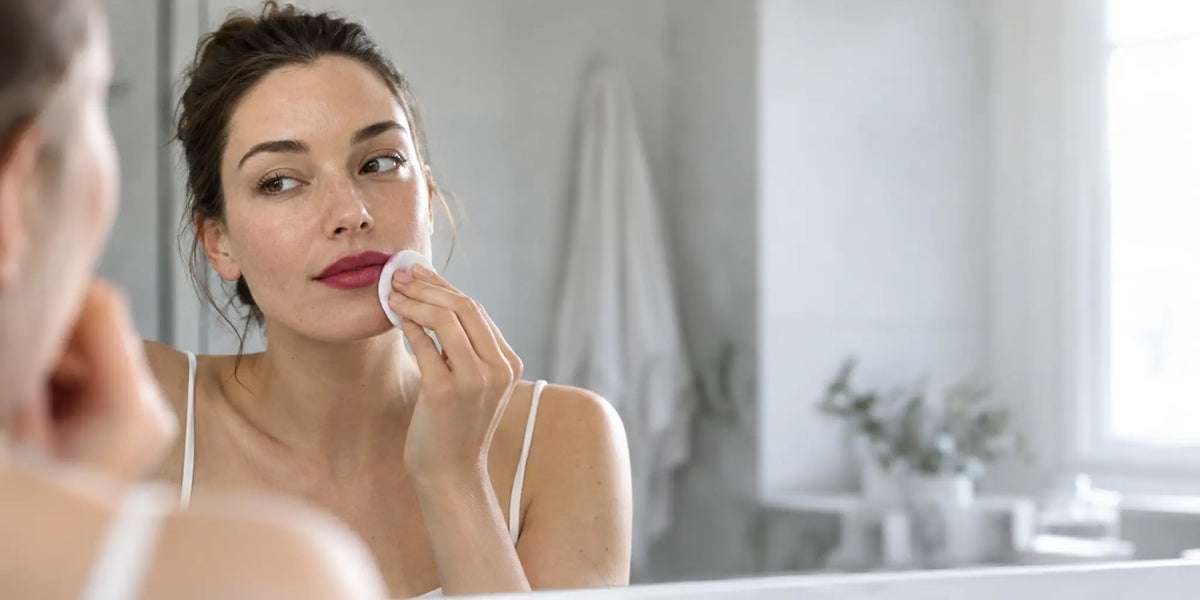
How to Remove Lip Stain Without Scrubbing Your Lips
To remove lip stain without scrubbing, soften the surface with a lip-safe remover, press a saturated cotton pad against closed lips for about 10 seconds, then lift and wipe gently in short passes. Repeat only where pigment still transfers. A faint tint may remain after the removable film is gone; chasing that color with friction can leave lips feeling more uncomfortable than the stain itself.
Key Takeaways
- Follow the stain label first because formulas and removal directions differ.
- Use a press-and-lift motion before wiping; repeated dry rubbing is unnecessary.
- Stop when the pad no longer picks up meaningful pigment, even if a soft tint remains.
- Skip gritty scrubs on lips that already feel dry, tight, cracked, or sensitive.
- Apply simple lip care only after lips are clean and dry.
Statement lips are having a visible fall comeback. An October 8, 2026 Allure trend report points to renewed interest in bold, opaque and longer-wearing color, while an October 9, 2026 lip-stain review highlights a K-beauty formula designed to leave visible color after its glossy layer is wiped away. More pigment can also make the end-of-night removal step feel less obvious. The goal is not to erase every trace in one pass; it is to remove product residue with as little friction as practical.
What Makes Lip Stain Different From Lipstick?
Traditional lipstick often sits as a waxy or creamy layer on the surface. Lip stain is meant to leave color behind after some of that surface layer transfers or wears away. Water tints, glossy stains, peel-style stains, stain liners, and hybrid lip products do not all behave the same way. Their labels may call for different wear times or removal methods.
That distinction matters at the sink. If color remains but the lips no longer feel coated, sticky, waxy, or slick, you may be seeing the intended tint rather than leftover product. Give the remaining color time to fade instead of escalating to rough cloths or repeated exfoliation.
| What you notice | What it may mean | Best next move |
|---|---|---|
| Glossy, tacky, or waxy feel | Surface product may still be present | Press on more remover, wait briefly, then lift |
| Color transfers to a clean pad | Removable pigment remains | Use one more gentle pass on that area |
| Soft color remains but the pad stays mostly clean | The stain may be doing what it was designed to do | Stop rubbing and let the tint fade gradually |
| Burning, stinging, swelling, or persistent discomfort | The product or removal method may be irritating | Stop, rinse as directed, and seek qualified advice if needed |
How to Remove Lip Stain Gently
Step 01 — Read the product directions
Check the stain label before reaching for another product. The FDA's general cosmetics guidance tells consumers to read labels, follow directions, and heed warnings. If the brand specifies warm water, a damp cloth, micellar water, or an oil-based remover, use that method unless you know an ingredient is unsuitable for you.
Step 02 — Wash your hands and blot excess
Wash and dry your hands. If the stain still has a glossy top layer, lightly blot once with a clean tissue. Do not rub back and forth. Blotting removes loose surface product so your remover can contact the remaining film more evenly.
Step 03 — Saturate a soft pad
Choose a remover whose label permits use on the lips or mouth-area skin. Saturate a soft cotton pad or clean reusable round so it glides rather than drags. A nearly dry pad creates more friction and usually leads to unnecessary extra passes. Keep the product out of your mouth.

Step 04 — Press, wait, and lift
Close your lips, place the saturated pad over one section, and hold it there for roughly 10 seconds. Lift before wiping in one short outward pass. Move to a clean part of the pad and repeat on the next section. Around the lip line, fold the pad over a fingertip for control instead of scrubbing with the edge of a washcloth.
Step 05 — Check before repeating
Use a fresh part of the pad to test whether pigment is still transferring. If it is, repeat the press-and-lift motion once. If the pad stays mostly clean and your lips no longer feel coated, stop. Do not use a toothbrush, gritty sugar mixture, fingernails, or a rough towel to chase a shadow of color.
Step 06 — Rinse or wipe as the remover directs
Some removers are leave-on products; others need rinsing. Follow that label, then pat your lips dry. Avoid stacking several new products immediately afterward. The American Academy of Dermatology's guidance for dry lips advises stopping products that cause burning, stinging, or tingling.
Aftercare: Keep It Simple
If your lips feel normal after removal, a thin layer of a familiar, non-irritating lip product can reduce the dry feeling that sometimes follows cleansing. If they feel raw, swollen, or persistently uncomfortable, stop adding products and get qualified guidance.

If your lips feel comfortable and you want a clear finish, shop nooni appleclear lip oil. The current official listing identifies it as a 3.7 ml (0.12 fl oz.) lip oil and directs users to apply it evenly to clean, dry lips with the applicator, then reapply as needed. It is lip care, not a lip-stain remover, and individual sensitivities still matter.
Common Mistakes to Avoid
- Starting with friction: Dry rubbing moves pigment around before it has softened.
- Using a face product without checking the label: A facial cleanser is not automatically intended for direct lip use.
- Assuming tingling means a product is working: Discomfort is a reason to stop and reassess.
- Sharing lip products or applicators: The FDA recommends not sharing makeup and keeping containers clean and closed.
- Ignoring a known sensitivity: Review labels carefully; the FDA's cosmetics-allergen resource explains that makeup can provoke reactions in some consumers.
Bottom Line
Removing lip stain is less about force and more about contact time. Read the stain and remover labels, saturate a soft pad, press before you wipe, and stop when residue no longer transfers. A faint tint can be normal. If your lips sting or feel increasingly uncomfortable, end the routine rather than adding friction.
Sources
- Allure: 2026 dramatic lipstick trend (October 8, 2026)
- Allure: K-beauty lip stain review (October 9, 2026)
- American Academy of Dermatology: Guidance for dry, chapped lips
- U.S. Food and Drug Administration: Using Cosmetics Safely
- U.S. Food and Drug Administration: Allergens in Cosmetics
- Federal Trade Commission: Advertising Substantiation Policy
Related Reading
- How to Remove Red Lipstick Without Scrubbing
- How to Prep Lips for Dark Lipstick Without Over-Exfoliating
- How to Remove Frosted Lipstick Without Leaving Shimmer Behind
Frequently Asked Questions
Select a question to open the answer.
Can micellar water remove lip stain?
It may remove some formulas if its label permits use on the lips or mouth-area skin. Saturate a soft pad, press before wiping, and follow both product labels.
Should I scrub lip stain with sugar?
No. A gritty scrub adds friction and is a poor choice when lips feel dry, tight, cracked, or sensitive. Soften removable pigment and use a gentle press-and-lift motion instead.
Can I use facial cleansing oil on my lips?
Only if the cleansing oil label permits that use and you follow its directions. A face cleanser is not automatically intended for direct lip use, and it should be kept out of the mouth.
Why does color remain after cleansing?
Lip stain is designed to leave tint behind. If your lips no longer feel coated and a clean pad picks up little pigment, stop rubbing and let the remaining color fade gradually.
What should I apply after removing lip stain?
If your lips feel normal, use a thin layer of a familiar, non-irritating lip product on clean, dry lips. Stop if any product causes burning, stinging, or persistent discomfort.
Product & Skin Notice
This article is for general informational purposes only. Individual skin types, sensitivities, and results may vary. Always review the product label, ingredient list, directions, and warnings before use. Discontinue use if irritation occurs, and consult a qualified healthcare professional if you have an existing skin condition, known allergies, or persistent concerns.
Read more
Remove frosted lipstick gently, lift lingering pearl and shimmer, and check for residue without scrubbing or over-cleansing delicate lips at night.
Wash before using a microcurrent device, dry fully, and follow its gel and safety directions. Here’s a calm, simple, label-first skin-prep routine.