



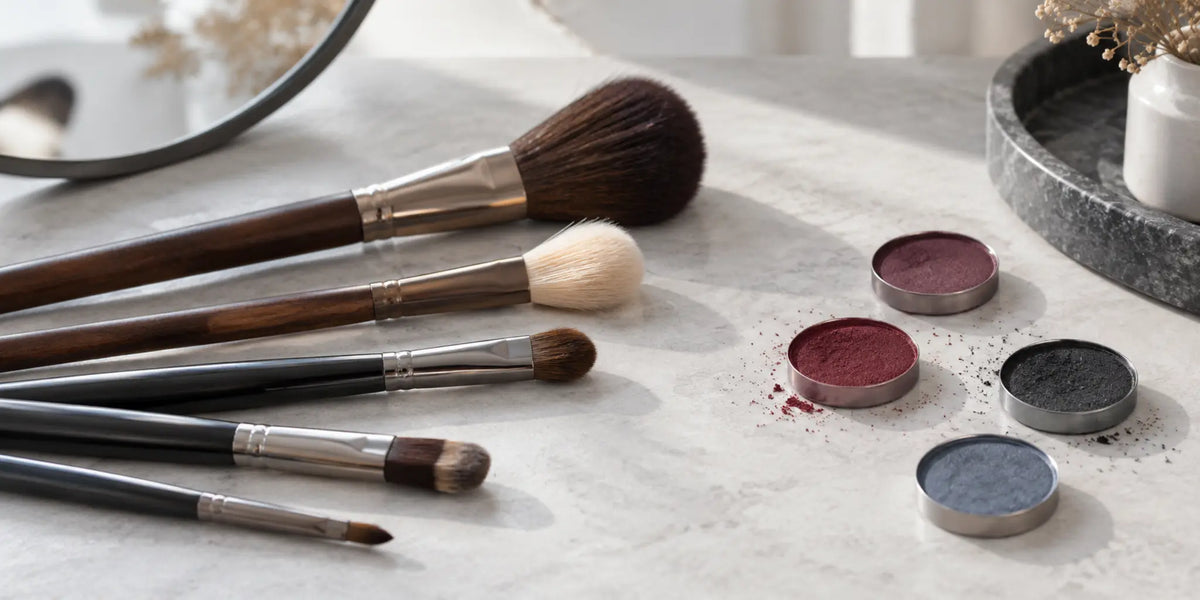
How to Clean Makeup Brushes Between Bold Colors
When you need to switch makeup-brush colors during one look, the cleanest practical option is a separate clean, dry brush. A dry wipe can remove visible powder for a quick shade change, but it is not the same as washing. After the session, wash reusable brushes according to the brush maker's directions, rinse completely, and let them dry flat before they return to your kit.
Key Takeaways
- Use a separate clean brush when color accuracy or eye-area hygiene matters.
- Consider a dry wipe pigment removal, not a full cleaning method.
- Wash reusable brushes on a regular schedule and whenever their directions call for it.
- Keep water on the bristle tips, rinse thoroughly, and dry brushes flat.
Why Brush Care Matters for Fall and Halloween Color
Bold color is having a real moment. Page Six reported on October 6, 2026 that stronger eye looks, dramatic smoky color, and bright solid shades are moving into fall routines. Allure's fall 2026 trend report also points to single-color mineral washes, soft smoky eyes, and visible berry tones. Those looks may ask one small kit to move through plum, charcoal, blue, and shimmer in a single sitting.
The issue is not that one trace of color automatically ruins a look. It is that color switching and brush cleaning solve different problems. Removing loose pigment can help you keep a shade from turning muddy. Washing addresses the brush itself. The American Academy of Dermatology recommends washing makeup brushes every 7 to 10 days and gives a complete rinse, shampoo, and flat-dry method.
| What you need | Best option | What it does not mean |
|---|---|---|
| A crisp switch from a dark powder to a pale shade | Pick up a separate clean, dry brush | The first brush is not ready for storage just because you stopped using it |
| A quick change between nearby powder shades | Wipe loose pigment onto a clean, dry tissue, then check the bristles | A dry wipe is not a wash |
| A switch between eye and face placement | Use separate tools assigned to each area | General face use does not make a product or tool appropriate for the eye area |
| A brush used with cream, liquid, adhesive, or damp product | Set it aside for a label-compatible wash and use another clean brush | Rubbing it on a towel does not complete the cleaning step |
How to Switch Makeup-Brush Colors During One Look
Step 01 — Start With Clean Hands and a Clean Work Area
Wash and dry your hands before opening makeup. Put clean brushes in one area and used brushes in another so you do not have to guess later. Keep containers closed when they are not in use. The FDA's general cosmetics guidance says to read labels, follow warnings, wash hands before use, keep containers clean and closed, and avoid sharing makeup.
Step 02 — Assign Brushes by Formula and Placement
Separate eye brushes from face brushes before the look begins. Within each group, give dense dark shades, pale shades, shimmer, and cream formulas their own tools when possible. This is especially useful for a Halloween palette with sharply different colors. If you are also planning elaborate face color, review our guide to washing your face before Halloween makeup so product placement and tool setup happen before application.

Step 03 — Use a Separate Clean Brush for a High-Contrast Change
Moving from charcoal to cream, berry to blue, or glitter to matte is where a second brush earns its place. It gives you a dry tool with no hidden dampness and no obvious leftover shade. The same logic applies when you move from a general face area toward the eyes. The FDA's eye cosmetic safety page emphasizes keeping eye cosmetics clean and not sharing them, while the American Academy of Ophthalmology advises careful use of cosmetics around the eyes.
Step 04 — Know What a Dry Wipe Can and Cannot Do
For nearby powder shades, gently sweep the bristles over a fresh, dry tissue until little visible color transfers. Check the brush under neutral light. This can reduce loose pigment and help the next shade read more clearly. It does not remove everything held deeper in the bristles, replace routine washing, or make a shared brush appropriate for another person. If the bristles are damp, sticky, strongly colored, or used with a cream or liquid, set the brush aside.
Step 05 — Keep Used Brushes Out of the Clean Cup
Place used tools on a washable tray or clean paper towel with the handles pointing the same way. Do not return them to the clean brush holder. This simple separation is useful for a long makeup session and makes the after-look wash easier to complete. For another tool-specific routine, see how to clean a cushion puff between uses and our guide to cleaning a lip mask spatula.
How to Wash Makeup Brushes After the Look
Step 06 — Read the Brush Maker's Directions First
Brush materials, ferrules, adhesives, and handle finishes vary. Follow the manufacturer's method when it differs from general advice. If the directions are missing or the brush is damaged, do not invent a soak, solvent, heat setting, or sanitizer routine. This article does not recommend using face cleanser, cleansing oil, or makeup remover on brushes unless the brush maker specifically allows it.
Step 07 — Rinse Only the Bristle Tips
Use lukewarm running water and point the bristles downward. AAD guidance says to rinse the tips rather than submerging the whole brush head, because soaking the connection can loosen the glue between the head and handle. Keep the ferrule and handle as dry as practical.

Step 08 — Lather, Rinse, and Repeat as Directed
The AAD method uses a bowl of lukewarm water with a tablespoon of gentle or clarifying shampoo. Swirl the tip, massage the bristles lightly in your palm if needed, and rinse under running water. Continue until the rinse water is clear. Keep pressure light so the brush keeps its shape.
Step 09 — Blot and Dry Flat
Press out excess moisture with a clean, dry paper towel. Reshape the bristles, then lay each brush flat on a towel with the tips extending beyond the counter edge. AAD guidance says not to dry brushes upright in a container because water can travel down toward the handle connection. Wait until the brushes are completely dry before returning them to a closed kit or using them again.
Common Brush-Care Shortcuts to Skip
- Sharing brushes: both FDA and AAD guidance advise keeping makeup tools personal.
- Adding water directly to a cosmetic: do not change a formula unless its label explicitly allows it.
- Soaking the whole brush: this can expose the ferrule and handle connection to water.
- Using an eye brush for an unlabeled face product: the intended area on the product label still controls.
- Making a sanitation claim from a quick wipe: under the FTC's advertising substantiation policy, objective claims need a reasonable basis.
Bottom Line
Use a separate clean, dry brush for bold color changes whenever you can. A dry tissue can remove loose powder during one personal makeup session, but it does not replace washing. After the look, follow the brush maker's directions, rinse only the tips, use a compatible cleanser, rinse until clear, blot, and dry flat. Keep eye tools separate, never share brushes, and return only fully dry tools to your clean kit.
Sources
- Page Six: These Are Fall's Top Makeup Trends, According to a Celebrity Beauty Pro
- Allure: Fall 2026 Makeup Trends Put Your Best Features Front and Center
- American Academy of Dermatology: How to Clean Your Makeup Brushes
- FDA: Using Cosmetics Safely
- FDA: Eye Cosmetic Safety
- American Academy of Ophthalmology: How to Use Cosmetics Safely Around Your Eyes
- FTC: Policy Statement Regarding Advertising Substantiation
Related Reading
- How to Clean a Cushion Puff Between Uses
- Should You Wash Your Face Before Halloween Makeup?
- How to Remove Halloween Makeup Without Scrubbing
Frequently Asked Questions
Select a question to open or close the answer.
Do I need to wash a makeup brush every time I change colors?
Not necessarily during one personal makeup session. Use a separate clean, dry brush for a strong color change. A dry tissue can remove loose powder between nearby shades, but that is not a full wash. Clean reusable brushes on their regular schedule and as the maker directs.
Can I use the same brush for face paint and eye shadow?
Use separate brushes unless both product labels and the brush directions support the intended placement. A product labeled for general face use is not automatically intended for the eyelids or immediate eye area.
How often should I wash makeup brushes?
The American Academy of Dermatology recommends washing makeup brushes every 7 to 10 days. Follow the brush maker's directions as well, and wash sooner when the directions or the product used with the brush require it.
Can I dry makeup brushes upright?
AAD guidance recommends laying brushes flat on a towel with the tips hanging over the counter edge. Drying them upright can let water move toward the connection between the brush head and handle.
Can I share clean makeup brushes with a friend?
Do not share makeup brushes. FDA and AAD guidance both advise keeping makeup and brushes personal, even when the tools appear clean.
Product & Skin Notice
This article is for general informational purposes only. Individual skin types, sensitivities, and results may vary. Always review the product label, ingredient list, directions, and warnings before use. Discontinue use if irritation occurs, and consult a qualified healthcare professional if you have an existing skin condition, known allergies, or persistent concerns.
Read more

Start Halloween makeup on clean, dry skin. Use this label-first prep routine for face paint, eye looks, tools, and gentle cleansing without over-washing.

Remove frosted lipstick gently, lift lingering pearl and shimmer, and check for residue without scrubbing or over-cleansing delicate lips at night.