



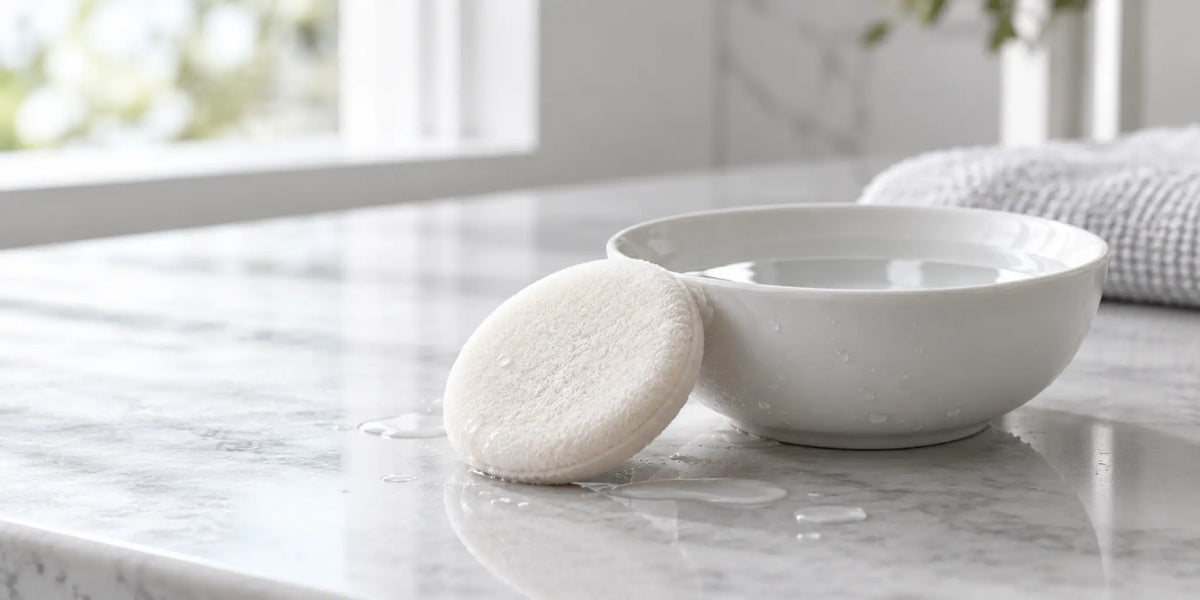
How to Clean a Cushion Puff Between Uses
Clean a reusable cushion puff by following its own care label first, then gently press-washing rather than twisting or scrubbing. Rinse until no cleanser remains, remove excess water without wringing, and let the puff dry completely in a clean, well-ventilated place before it goes back into the compact. If the puff is marked single-use or the brand says not to wash it, replace it instead.
Cushion foundation is having a renewed US moment: a September 28, 2026 report described the format’s return and the puff’s central role in pressing thin layers onto skin. That makes puff care a timely part of a K-beauty routine—not an afterthought. The goal is simple: follow the tool maker’s instructions, avoid transferring residue back into the compact, and keep damp materials out of closed storage.
Key Takeaways
- Check the cushion and puff labels before washing; materials and replacement schedules vary.
- Use the cleaner and water temperature the puff maker recommends. Do not assume a face cleanser is also a tool cleanser.
- Press and release instead of rubbing, stretching, twisting, or wringing.
- Rinse thoroughly and let the puff dry completely in open airflow before reuse or storage.
Why Cushion Puff Care Matters
A cushion puff repeatedly touches your face and the foundation surface. The FDA’s guidance on microbiological safety says consumer use can contribute to cosmetic contamination, advises washing hands before application, keeping containers clean, and not sharing cosmetics. It also says cosmetics should be stored as manufacturers direct because warm or damp storage can favor microbial growth.
That does not mean every stained puff is unsafe. Pigment can remain after washing, and a clean-looking puff can still hold moisture. Visual appearance is only one signal. Odor, mold, torn material, rough texture, loss of elasticity, and the maker’s replacement guidance matter too.
| Situation | Best next step | Why |
|---|---|---|
| Visible foundation buildup | Wash according to the puff label or replace if it is not washable. | Residue can affect how evenly the puff applies product. |
| Puff is still damp | Keep it outside the closed compact until fully dry. | Open airflow helps moisture escape. |
| Persistent odor, visible mold, tears, or roughness | Stop using it and replace it. | Washing cannot restore damaged material or make visible mold acceptable. |
| No care instructions available | Ask the brand or use a compatible replacement puff. | A universal cleaning method can damage some foams, fabrics, adhesives, or coatings. |
How to Clean a Washable Cushion Puff
This is a conservative routine for a puff whose maker allows washing. Shiseido’s official puff-care guidance describes gentle pressing with diluted neutral detergent or a dedicated sponge cleaner, thorough rinsing, and complete shade-drying. Beautyblender’s care guidance likewise emphasizes rinsing, squeezing out excess cleanser and water, and complete drying in a clean, ventilated area. Your puff’s directions take priority over either example.
Step 01 — Read the compact and puff instructions
Confirm that the puff is reusable and washable. Note any required cleanser, water temperature, drying method, or replacement interval. If instructions conflict with this guide, follow the product-specific instructions.
Step 02 — Wash your hands and prepare a clean area
Start with clean hands, a clean bowl or sink, and a fresh towel. The FDA recommends washing hands before applying cosmetics and keeping cosmetic containers clean. Remove the puff from the compact before adding water so you do not dilute the foundation or introduce water into the product reservoir.
Step 03 — Press-wash gently
Use the puff-compatible cleanser specified by the maker. If the instructions allow a mild or neutral detergent, dilute it as directed. Press the puff lightly between your fingertips to move cleanser through the material. Avoid hard rubbing, fingernails, brushes, aggressive twisting, and long soaking unless the label specifically permits them.

Step 04 — Rinse and blot without wringing
Rinse with the temperature of water specified by the maker until no foam or slick cleanser remains. Press the puff between your palms or against a clean towel to remove excess water. Do not wring it like a cloth; repeated twisting can distort layered materials.
Step 05 — Dry completely in open airflow
Place the puff flat on a clean ventilated surface or stand it on an edge if its construction allows. Keep it out of a closed compact, sealed pouch, drawer, or makeup bag while damp. Avoid direct sun or high heat unless the maker explicitly allows it.

How Often Should You Wash It?
There is no single schedule for every cushion puff. A maker may recommend washing after each use, about weekly, when residue becomes visible, or not washing a disposable puff at all. Beautyblender recommends washing its own blender after every use, while some cushion brands publish different schedules for their specific puffs. Consider those product-specific directions, not universal rules.
A practical label-first check is to clean a washable puff when the maker says to, when visible product builds up, or when application becomes less even. Keep a second compatible puff on hand if the first one needs more time to dry. Never speed the process by returning a damp puff to the compact.
What Not to Use Without Brand Approval
Skip household disinfectant, bleach, very hot water, essential oils, or rubbing alcohol unless the puff manufacturer specifically directs their use. Shiseido cautions that ethanol can damage some cosmetic tools. Also avoid fragrance-heavy cleaning products if the puff maker has not approved them, since incomplete rinsing can leave residue that later touches skin.
A facial cleanser is not automatically a puff cleanser. For example, the live directions for nooni snowflake whipping cleanser say to lather a small amount on wet hands, massage a damp face and neck for 10–15 seconds, rinse with warm water, and pat dry; they also say to avoid eye contact. Those directions are for skin, not cushion puffs, so use the product on a puff only if nooni or the puff maker separately confirms compatibility.
Keep the Compact and Your Face Routine Separate
Do not pour water or cleaner into the cushion compact. The FDA advises against adding water to cosmetics and recommends keeping containers clean and tightly closed when not in use. Wipe only the compact surfaces the brand says may be cleaned, and avoid flooding hinges, seals, or the product reservoir.
After wearing cushion foundation, remove your makeup according to its label and follow your normal face-cleansing routine. The American Academy of Dermatology recommends lukewarm water, fingertips, a gentle non-abrasive cleanser, no scrubbing, and patting dry. If long nails make fingertip cleansing awkward, our gentle face-washing guide for long nails offers a lower-friction routine.
When to Replace the Puff
Replace a puff that develops visible mold, a persistent unusual odor, tears, separation, rough patches, permanent stiffness, or a noticeable loss of bounce. Replace it sooner if its label gives a fixed timeline. Beautyblender advises replacing its own blender every three months, but that interval should not be copied to every cushion puff.
Never share the puff or compact. The FDA says not to share makeup, and its safety guidance advises discarding cosmetics when color or smell changes. If the foundation itself changes color, smell, or texture, stop using it and follow the brand’s guidance rather than trying to solve the issue by washing only the puff.
Bottom Line
A clean cushion routine is mostly about sequence: confirm the puff is washable, wash your hands, remove it from the compact, press-wash with an approved cleaner, rinse thoroughly, blot without wringing, and dry completely in open airflow. Replace the puff when the maker says to or when damage, odor, or mold appears. Keep puff care separate from face cleansing, and let each label decide what touches the tool and what touches your skin.
Sources
- The Looker, “Cushion Foundation Is Back—Here’s How to Actually Use It,” September 28, 2026
- FDA: Microbiological Safety and Cosmetics
- FDA: Using Cosmetics Safely
- Shiseido: Recommended Care for Sponges, Puffs, and Tips
- Beautyblender: Product Care FAQs
- American Academy of Dermatology: Face Washing 101
- FTC: Policy Statement Regarding Advertising Substantiation
Related Reading
- How to Remove Skin Tint at Night Without Over-Cleansing
- How to Remove Blush and Bronzer Without Over-Cleansing
- How to Remove Setting Spray at Night Without Over-Cleansing
Frequently Asked Questions
Select a question to open the answer.
How often should I clean a cushion puff?
Follow the puff maker’s schedule. If it is washable and no interval is given, clean it when visible residue builds up or application becomes uneven, and let it dry completely before reuse. Do not wash a puff labeled single-use.
Can I wash a cushion puff with my face cleanser?
Not automatically. A face cleanser is labeled for skin, and a puff may require a dedicated tool cleanser or a specific mild detergent. Use only what the puff maker recommends or confirms as compatible.
Can I put a damp puff back in the compact?
No. Keep a washed puff outside the compact until it is completely dry in a clean, well-ventilated place. Do not add water to the cushion foundation.
Can I use rubbing alcohol on a cushion puff?
Only if the puff manufacturer specifically approves it. Alcohol can damage some cosmetic tool materials, so a dedicated puff cleaner or the maker’s recommended mild detergent is the safer label-first choice.
When should I replace a cushion puff?
Replace it when its label says to, or sooner if you see mold, tears, separation, roughness, loss of elasticity, or notice a persistent unusual odor. Stop using a puff with visible mold.
Product & Skin Notice
This article is for general informational purposes only. Individual skin types, sensitivities, and results may vary. Always review the product label, ingredient list, directions, and warnings before use. Discontinue use if irritation occurs, and consult a qualified healthcare professional if you have an existing skin condition, known allergies, or persistent concerns.
Read more

Wash your face after hairspray reaches your skin. Follow a gentle, label-first routine for the hairline, forehead, brows, cheeks, and neck too.
Trying on makeup in a store? Learn when to wash your face, how to use testers more carefully, and a gentle cleanup routine without scrubbing.