



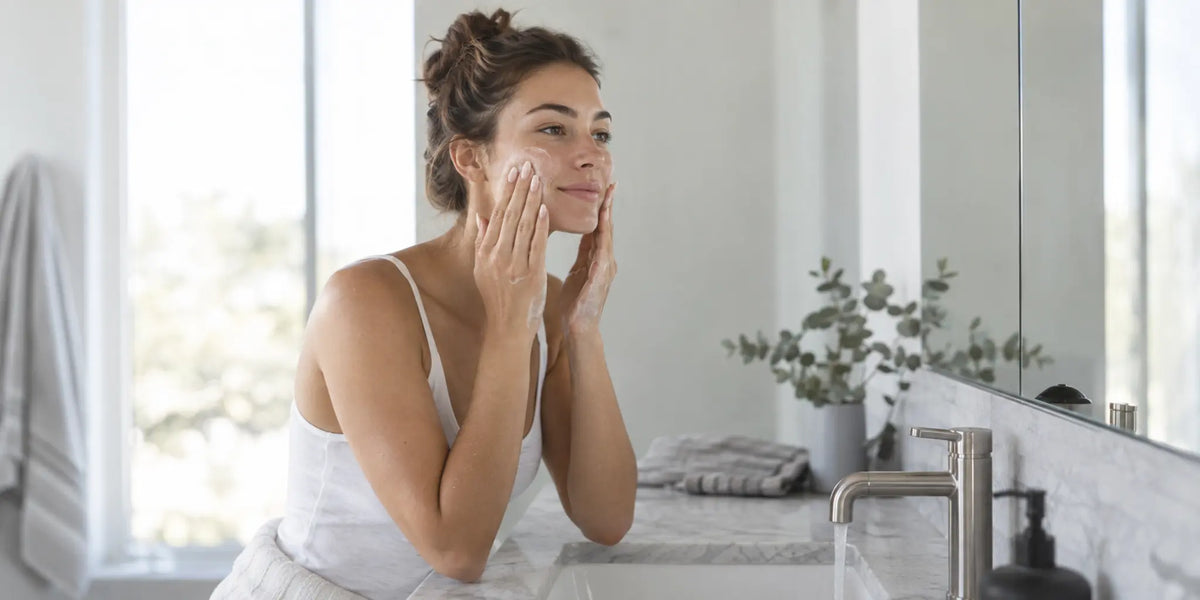
Yes, you can wash your face with long natural, acrylic, gel, or press-on nails. Wash your hands and the undersides of your nails first, make lather between your palms, and glide the flat pads of your fingers over your face while angling every nail edge away. Keep the pressure light, move slowly around the eyes and hairline, then rinse and pat dry.
The goal is not a special gadget or a longer cleanse. It is better control. Long almond nails are a visible 2026 beauty look, but their extra length changes the angle between your fingertips and your face. A few small adjustments can make a familiar routine feel far more comfortable.
Key Takeaways
- Clean your hands and under your nails before touching your face.
- Use finger pads and palms, never pointed tips or nail edges.
- Choose lukewarm water, light pressure, and an unhurried pace.
- Pause if an extension feels loose, lifted, sharp, or likely to catch.
Why Long Nails Change Face-Washing Technique
Long nails do not automatically make a face-washing routine harsh. They do reduce the margin for error. If you curl your fingers toward your palm, the tips may point toward your cheeks. If you reach quickly into a narrow area beside the nose or around the hairline, an edge may make contact before the soft part of your finger does.
Cleanliness matters too. The CDC's nail hygiene guidance, dated April 16, 2024, says more dirt and bacteria can gather under long nails than short nails. That is a reason to begin with hand and nail hygiene, not a reason to scrub your face more firmly. The CDC advises cleaning under the nails with soap and water when washing your hands.
For the face itself, the American Academy of Dermatology's face-washing guidance favors a gentle cleanser, lukewarm water, fingertips, no scrubbing, and a soft towel for patting dry. Those basics fit long nails well once you shift contact from the tips to the broad finger pads.

How to Wash Your Face With Long Nails
Step 01 — Check Your Nail Edges
Before turning on the faucet, look for a rough corner, lifting press-on, loose extension, or snag. If an edge feels unpredictable, deal with the manicure separately before bringing it close to your face. Do not use your facial towel or cleanser to clean beneath a nail.
Step 02 — Wash Your Hands and Under Your Nails
Follow the CDC hand-hygiene basics: wet your hands, apply soap, lather all surfaces, and rinse well. Give the undersides of longer nails deliberate attention. If you use a nail brush, keep it for nails; it is not a facial cleansing tool.
Step 03 — Wet Your Face and Build Lather Away From It
Use lukewarm water. Dispense your cleanser into your palm, then work it into a light lather with the opposite palm and finger pads. This spreads the formula before your nails come near your face and makes it easier to control where your fingers land.
If you use nooni snowflake whipping cleanser, the current 5.07 fl oz label directions say to place a small amount on wet hands, add a small amount of water, lather, massage over a damp face and neck for 10–15 seconds, rinse with warm water, and pat dry. Avoid contact with eyes and rinse immediately if contact occurs. nooni does not state that this cleanser cleans beneath nails, changes scratch risk, or replaces hand and nail hygiene.
Step 04 — Cleanse With the Pads of Your Fingers
Open your hands slightly instead of curling them. Let the flat, fleshy pads beneath your fingerprints touch the skin while the nails point outward. Work one zone at a time: forehead, each cheek, nose and chin, then neck. Small, controlled passes are easier than fast circles.
At the sides of the nose, use the pad of one index finger and approach from the side. Near the eyes, slow down and leave comfortable space between the nail edge and the lash line. If you wear contacts, review whether to remove contact lenses before washing your face.
Step 05 — Rinse Without Scooping at the Skin
Cup water in your palms or use gently running water, then sweep remaining lather away with open hands. Check the hairline, jaw, and sides of the nose. Rinse your hands again so cleanser is not left around or beneath long nail edges.
Step 06 — Pat, Do Not Drag
Press a clean, soft towel lightly against the skin. Hold it with open hands so the nails remain behind the fabric and away from your face. Avoid gathering the towel into a tight fist, which points the nail tips forward.

Adjust the Technique to Your Manicure
| Nail situation | Best adjustment | What to avoid |
|---|---|---|
| Long natural or almond nails | Keep fingers relaxed and use broad finger pads. | Curling the tips toward the cheeks. |
| Square or coffin tips | Approach narrow areas from the side with one finger pad. | Letting a corner lead the motion. |
| Pointed or stiletto tips | Slow down, open the hand, and cleanse one small zone at a time. | Fast circles near the eyes or nose. |
| Acrylic, gel, or press-on nails | Check every edge before washing and keep undersides clean. | Continuing if a tip feels loose or lifted. |
The FDA's nail product information explains that artificial-nail products and polishes are cosmetics and that consumers should follow labeled directions and warnings. Your manicure's own care instructions still matter, especially if water exposure or a loose edge is a concern.
Common Mistakes to Skip
Using the nails as tiny cleansing tools
Nail tips are not for scraping around the nose, lifting flakes, or picking at texture. If a spot does not move with gentle fingertip contact, more pressure is not the answer.
Scrubbing longer to feel extra clean
Length and force are different from thoroughness. Follow the product's directions and use complete, controlled coverage. If timing is confusing, see how long to wash your face and how much cleanser to use.
Switching automatically to a rough cloth
A cloth is not automatically safer just because your nails are long. AAD recommends fingertips for facial cleansing. If you are weighing the options, compare washing with a washcloth or hands. Whatever touches your face should be clean, soft, and used without scrubbing.
Using very hot or icy water
Lukewarm water is the simple default in AAD guidance. For more context, read about cold versus warm water for face washing.
When to Pause the Routine
Stop if you cannot keep a sharp, cracked, or lifted edge away from your face. Secure or remove the nail according to its directions before trying again. If your skin is already uncomfortable, use less pressure and fewer passes; do not rely on the nail shape itself to judge what your skin needs.
The FDA's cosmetic safety guidance recommends reading labels, using products as directed, keeping containers clean, and stopping use if a cosmetic causes a reaction. The FTC's advertising substantiation policy is also why this guide avoids promises about what a cleanser or manicure can accomplish without specific support.
Bottom Line
You do not need to choose between long nails and a comfortable face wash. Start with clean hands and nail undersides, make lather in your palms, keep nail edges angled away, and use the pads of your fingers with light pressure. Move slowly through narrow areas, rinse completely, and pat dry with open hands. If a nail feels loose or sharp, pause first.
Sources
- Centers for Disease Control and Prevention: Healthy Habits—Nail Hygiene, April 16, 2024
- American Academy of Dermatology: Face Washing 101
- U.S. Food and Drug Administration: Nail Care Products
- Vogue: This Nail Shape Never Goes Out of Style, April 6, 2026
Related Reading
- Should You Wash Your Face With a Washcloth or Your Hands?
- How Long Should You Wash Your Face?
- Should You Remove Contact Lenses Before Washing Your Face?
Frequently Asked Questions
Select a question to open or close the answer.
Can I wash my face safely with long nails?
Yes. Wash your hands and under your nails first, use the flat pads of your fingers, angle nail edges away, and keep pressure light. Pause if any nail feels sharp, cracked, loose, or lifted.
How do I keep acrylic nails from scratching my face?
Check every edge before washing, open your hands instead of curling your fingers, and let the broad finger pads lead each motion. Work slowly around the nose, hairline, and eyes.
Should I use a washcloth instead of my fingers?
Not automatically. The American Academy of Dermatology recommends fingertips for facial cleansing because washcloths and mesh sponges can be irritating. Clean finger pads can still work with long nails when the tips stay angled away.
Do I need to clean under my nails before washing my face?
Yes. The CDC says more dirt and bacteria can gather under long nails than short nails and advises cleaning underneath with soap and water when you wash your hands.
What if a nail catches or feels loose while I am washing?
Stop the routine and move the nail away from your face. Follow the manicure product's directions to secure or remove it before washing again; do not keep rubbing with an unstable edge nearby.
Product & Skin Notice
This article is for general informational purposes only. Individual skin types, sensitivities, and results may vary. Always review the product label, ingredient list, directions, and warnings before use. Discontinue use if irritation occurs, and consult a qualified healthcare professional if you have an existing skin condition, known allergies, or persistent concerns.