



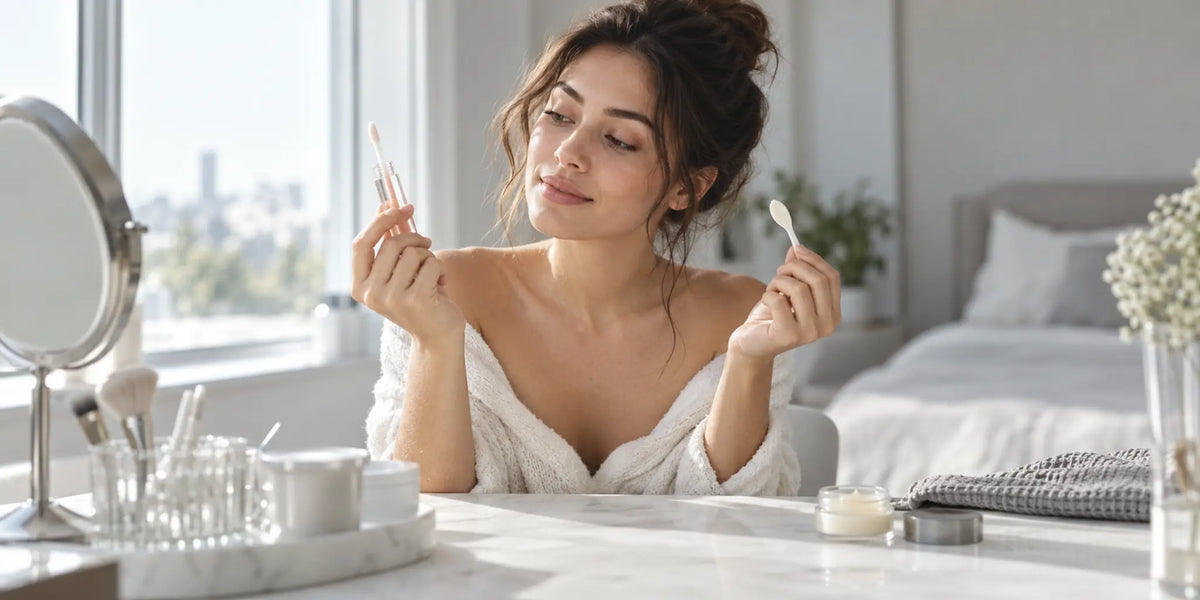
Lip Oil or Lip Mask First? A Label-First Routine
Use lip oil and a lip mask for different moments instead of assuming they must be stacked. Lip oil fits daytime shine and reapplication; a lip mask works well as a label-directed final lip-care step, often at night. If you want to combine them, check both labels first. When neither label gives a layering order, using one at a time is the clearest, least fussy choice.
Key Takeaways
- Lip oil and lip mask are not a required two-step pair.
- Apply either product to clean, dry lips when its current directions call for that starting point.
- For a simple routine, use lip oil during the day and lip mask as your final nighttime lip step.
- If you layer, use thin amounts and stop if the combination slides, pills, or feels uncomfortable.
Layered lip looks are especially visible in current beauty coverage. Recent fall-lip reporting focuses on combinations and finish, while 2026 trend coverage keeps texture and glassy shine in view. That makes “which one goes first?” a timely question—but a viral sequence should never outrank the directions printed for the products you actually own.
Lip Oil vs. Lip Mask: What Changes the Order?
The name on the package matters less than its directions, texture, and your goal. A lip oil is commonly used for shine and convenient touch-ups. A lip mask is usually richer and may be positioned for a longer, final step in a routine. Formulas vary, so there is no universal rule that every oil belongs under every mask or vice versa.

| Moment | Simplest choice | What to check |
|---|---|---|
| Daytime on bare lips | Lip oil | Clean, dry starting point; finish; reapplication directions |
| Before color cosmetics | Use only what the makeup finish can accommodate | Whether the base changes grip, edge definition, or transfer |
| Final nighttime step | Lip mask | Amount, tool hygiene, and any next-morning direction |
| When you want both | Follow the two labels; otherwise use one at a time | Compatibility, comfort, and whether the layers stay in place |
What the Current nooni Directions Actually Say
The live page for nooni appleberry lip oil lists a 3.7 ml / 0.12 fl oz. product and directs you to apply it evenly to clean, dry lips with the applicator tip, then reapply as needed. The live page for nooni appleberry peptide lip mask lists a 20 g / 0.70 oz. jar and directs you to use the spatula, take an appropriate amount, spread it gently over the lips, and reapply as needed.
Neither current direction sets a mandatory order for using the two products together. That absence matters: the most accurate routine is not to invent a universal stack. Choose the product that matches the moment, or keep the mask as the last lip step at night after anything earlier has been removed.
See nooni appleberry peptide lip maskA Simple Day-to-Night Routine
Step 01 — Read both labels
Check directions, warnings, and the current ingredient declaration before first use. The FDA explains that retail cosmetics generally carry an ingredient declaration, and its cosmetics-labeling resources are a useful reference for what that information means.
Step 02 — Start with clean, dry lips
Remove leftover color, food, and the previous layer without aggressive rubbing. Pat dry. If a product specifically gives a different starting instruction, follow that product instead.
Step 03 — Use lip oil for the daytime moment
Apply an even pass rather than repeatedly loading the applicator. Reapply only as needed and keep the applicator clean. If you are adding lipstick, your desired finish may decide whether the oil belongs before or after color; our separate guide explains that makeup-specific order.
Step 04 — Reset before the nighttime step
At the end of the day, remove lip color and the remaining oil gently. This creates a clear starting point for the mask and avoids turning the night step into an uncontrolled mix of old and new layers.
Step 05 — Apply the lip mask with its tool
Use the clean spatula and begin with enough for an even coat. The current nooni directions use “an appropriate amount,” not a fixed scoop. For a closer amount guide, see our day-and-night lip mask article. Keep the formula within the lip line and use less next time if it migrates.
Step 06 — Keep the routine responsive
Comfort is your cue to pause. The American Academy of Dermatology advises paying attention to products that make lips sting or feel uncomfortable. Stop using a product if irritation occurs, and do not use a general beauty routine to answer a persistent personal concern.

When Layering Can Get Messy
Two glossy layers can move more than one. Too much product may collect at the corners, cross the lip line, or make makeup less predictable. If the first layer is very slick, the second may simply redistribute it. A thicker result is not evidence that the routine is better.
If you still want to experiment, keep both amounts thin and try the combination when you do not need a precise lipstick edge. Wait briefly between layers, then check how the finish behaves when you speak. Remove excess with a clean tissue rather than adding another coat. This is a practical wear test, not a promise that two specific formulas are compatible.
Hygiene and Label Checks That Matter
Use the oil’s own applicator and the mask’s clean spatula. Avoid moving the mask spatula directly from your lips back into the jar without cleaning it. Close both packages promptly, store them as directed, and stop using a product if its odor, color, or texture changes unexpectedly.
The FDA’s allergen information also explains why reading the full ingredient declaration matters, especially if you know you are sensitive to a cosmetic ingredient. For marketing claims, FTC guidance emphasizes that express and implied messages should be truthful, not misleading, and supported. That is why this routine stays close to verified labels and avoids promising a result the product page does not support.
Bottom Line
You do not need to decide which product always goes first. Use lip oil as a flexible daytime layer and lip mask as a label-directed final step at night. When labels do not specify a joint routine, using one at a time is the simplest answer. If you choose to layer, use thin amounts, watch how the textures behave, and let comfort—not a rigid trend—set the limit.
Sources
- Allure: fall lip combinations, published October 12, 2026
- Vogue: 2026 lip trends
- American Academy of Dermatology: dermatologist tips for dry, chapped lips
- U.S. FDA: cosmetics labeling
- U.S. FTC: Health Products Compliance Guidance
Related Reading
- How Much Lip Mask Should You Use? Day and Night Guide
- Lip Oil Before or After Lipstick? A Simple Layering Guide
- How to Reapply Lip Oil After Eating and Drinking
Frequently Asked Questions
Select a question to open the answer.
Do lip oil and lip mask need to be layered?
No. They can serve different moments in the same day. Lip oil can be used for daytime shine and touch-ups, while a lip mask can be used as a label-directed final nighttime step.
If I layer them, which goes first?
Follow any order stated on the two labels. If neither label gives a joint order, using one product at a time is the simplest choice. If you still combine them, keep both layers thin and stop if the textures slide or feel uncomfortable.
Can I use lip oil during the day and lip mask at night?
Yes, when that use matches each product’s directions. Remove the daytime layer and any lip color gently, pat lips dry, and then follow the lip mask label.
How much lip mask should I apply at night?
Use enough for an even, comfortable coat and follow the product’s amount direction. The current nooni page says to take an appropriate amount with the spatula and spread it gently over the lips.
Should I apply a lip mask before lipstick?
Only if the mask directions and your desired makeup finish make that practical. A rich layer can change lipstick grip and edge definition, so a lighter routine or separate timing may work better.
Product & Skin Notice
This article is for general informational purposes only. Individual skin types, sensitivities, and results may vary. Always review the product label, ingredient list, directions, and warnings before use. Discontinue use if irritation occurs, and consult a qualified healthcare professional if you have an existing skin condition, known allergies, or persistent concerns.
Read more

Learn how much lip mask to apply for daytime comfort or a richer nighttime layer, plus a simple label-first routine for comfortable, dry-feeling lips.

Learn how to apply lip oil in a thin, controlled layer, keep the inner lip clean, and reduce transfer onto teeth without losing glossy shine.