



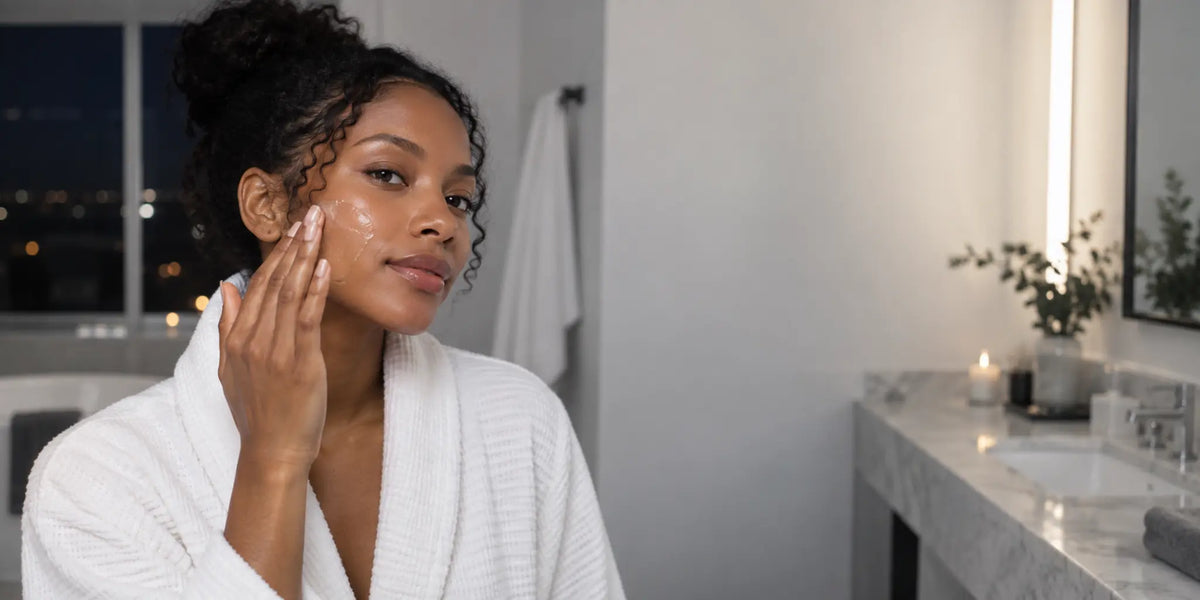
Do You Wash Off a Sleeping Mask in the Morning?
Leave a sleeping mask on for the time stated on its label, then follow that product’s morning removal directions. For many cream or gel sleeping masks, that means leaving the formula on overnight and gently rinsing or cleansing in the morning. An overnight hydrogel sheet mask or peel-off wrapping mask may instead be lifted away first. Do not assume every product called a “sleeping mask” comes off the same way.
This label-first distinction matters now because overnight K-beauty masks are receiving fresh U.S. beauty coverage. Who What Wear covered a celebrity-visible overnight gel mask on September 12, 2026, while Glamour’s August 2026 Korean face-mask guide describes several long-wear formats. Their popularity does not make the directions interchangeable.
Key Takeaways
- Keep a sleeping mask on only for the labeled contact time—even when “overnight” appears in its name.
- In the morning, rinse, cleanse, peel, or lift off exactly as directed for that specific format.
- Use lukewarm water and clean fingertips; scrubbing is unnecessary.
- If the mask causes unexpected burning, marked stinging, swelling, or persistent discomfort, remove it and discontinue use.
Sleeping Mask, Hydrogel Mask, or Wrapping Mask?
“Sleeping mask” describes when a product is used more clearly than how it is removed. A cream-like leave-on formula, a solid hydrogel sheet, and a peelable film can all be marketed for extended wear. The package directions tell you which one you have. The FDA advises reading the complete cosmetic label, following directions, and heeding warnings.
| What the label describes | Typical morning action | What not to assume |
|---|---|---|
| Leave-on cream or gel sleeping mask | Rinse or gently cleanse if the directions say to remove residue in the morning. | Do not leave it on through the next day unless instructed. |
| Overnight hydrogel sheet mask | Lift the sheet off at the stated time, then follow any rinse instructions. | Do not scrub away the remaining film. |
| Peel-off or wrapping mask | Loosen and peel as directed; rinse only if the label says to. | Do not pull hard at the hairline or delicate eye area. |
| Directions are missing or unclear | Pause use until you can confirm the full package or official brand instructions. | Do not copy the routine for a different mask. |
A long-wear hydrogel is not the same thing as the short-wear sheet mask in your drawer. If your question is about a conventional essence-soaked sheet, see our separate guide on whether to wash your face after a sheet mask.

How to Use and Remove a Sleeping Mask
Step 01 — Read the directions before bedtime
Confirm the intended area, amount, order, contact time, and removal method before the mask is on your face. Check whether the instructions say “last step,” “leave on overnight,” “remove after three hours,” “peel,” or “rinse in the morning.” Overnight is not permission to exceed a stated maximum time.
Step 02 — Review ingredients and warnings
Scan the ingredient declaration for anything you already know you avoid. The FDA notes that cosmetics can be associated with allergic responses and identifies fragrances, preservatives, dyes, metals, and natural rubber among common allergen classes. A product’s popularity or a soothing-looking texture cannot predict your individual response.
Step 03 — Introduce a new mask carefully
A sleeping mask has extended contact with your skin, so avoid debuting it on the same night as several other new formulas. The American Academy of Dermatology recommends testing a new skincare product on a small area first, using the normal amount and contact time. Our home product-testing guide explains why this screening step is different from professional diagnostic testing.
Step 04 — Prepare your skin as labeled
Many sleeping masks are positioned as the last step of an evening routine, but use the sequence on your own package. Remove makeup and sunscreen before bed with products intended for that job. Apply the mask to clean, dry, or otherwise prepared skin only as directed. More layers do not automatically make an overnight routine better.
Step 05 — Use the stated amount
Apply with clean hands and avoid the eyes, lips, hairline, or other areas when the warnings say so. A thicker coat can transfer to bedding and does not prove that the mask will work better. For a sheet or wrapping format, smooth it without tugging and make sure it does not obstruct your nose or mouth.
Step 06 — Remove it gently in the morning
Start with the label. Lift off a sheet, loosen a film, or rinse a cream as directed. When water is part of the instructions, use lukewarm water and fingertips. The AAD recommends gentle cleansing without scrubbing and patting dry with a soft towel. If you are deciding between a water rinse and cleanser, our guide to washing your face with only water in the morning offers a broader routine framework.

Step 07 — Continue with a simple daytime routine
After removal, pat your skin dry and continue with products that suit your usual morning routine. Do not judge an overnight product by a dramatic promise or a single social post. The FTC’s advertising substantiation policy requires a reasonable basis for objective product claims, including the meanings consumers may reasonably take from them.
When a Morning Cleanser Makes Sense
A cleanser may make sense when the mask’s directions explicitly say to cleanse it off, when a cream or film leaves residue you want to remove, or when cleansing already fits your normal morning routine. A water rinse may be enough when the label permits it and your skin feels comfortable. The decision should come from the mask directions and your established routine—not from a blanket rule that every sleeping mask demands a double cleanse.
If you do cleanse, keep the water comfortable rather than hot. Our guide to cold versus warm water for face washing explains why temperature extremes are not necessary.
Where nooni Snowflake Whipping Cleanser Fits
nooni snowflake whipping cleanser is currently Active in a 1-pack, 5.07 fl oz size. Its official directions say to squeeze a small amount onto wet hands, create a lather with a little water, gently massage a dampened face and neck for 10–15 seconds, rinse with warm water, and pat dry. Its current precautions say to avoid eye contact and rinse immediately with water if contact occurs.
Those are the cleanser’s directions, not sleeping-mask instructions. The current product page does not state that this cleanser is required after a sleeping mask or that it is designed specifically to remove one. Consider it only when a gentle cleanse fits the mask label and the rest of your morning routine.
Common Sleeping-Mask Mistakes
- Viewing every overnight mask as a cream: Hydrogel sheets and wrapping films use different removal methods.
- Ignoring a stated wear time: Follow the number on the package even if a trend suggests longer use.
- Scrubbing off residue: Soften it with the labeled removal method and use light fingertip contact.
- Stacking several unfamiliar products: Introduce one change at a time so an unexpected response is easier to understand.
- Assuming “natural” means risk-free: The FDA advises reading the full label and does not define “natural” as a cosmetic safety guarantee.
The AAD’s facial-mask guidance also recommends avoiding redundant ingredients that can make a routine more irritating and removing a mask immediately if itching, burning, or stinging occurs. If you experience swelling, eye involvement, severe discomfort, or a response that persists, seek advice from a qualified healthcare professional.
Bottom Line
Yes, many cream or gel sleeping masks are removed with a gentle morning rinse or cleanse—but the label decides. Lift off an overnight hydrogel sheet, peel a wrapping mask, or rinse a leave-on formula only as directed. Use lukewarm water, skip scrubbing, and stop if the product feels unexpectedly uncomfortable. “Overnight” is a contact-time cue, not a universal removal method.
Sources
- Who What Wear: Overnight K-Beauty Gel Mask Coverage, September 12, 2026
- Glamour: Best Korean Face Masks, August 2026
- U.S. Food and Drug Administration: Using Cosmetics Safely
- U.S. Food and Drug Administration: Allergens in Cosmetics
- American Academy of Dermatology: Facial Masks and Skin Care
- American Academy of Dermatology: How to Test Skin Care Products
- American Academy of Dermatology: Face Washing 101
- Federal Trade Commission: Advertising Substantiation Policy
Related Reading
- Should You Wash Your Face After a Sheet Mask?
- Can You Wash Your Face With Just Water in the Morning?
- How to Patch Test a New Face Cleanser at Home
Frequently Asked Questions
Select a question to open the answer.
Do you wash off a sleeping mask in the morning?
Follow the label. Many cream or gel sleeping masks are gently rinsed or cleansed away in the morning, while overnight hydrogel sheets and wrapping masks may be lifted or peeled off first.
Can you leave a sleeping mask on all day?
Do not extend the contact time beyond the directions. “Overnight” does not automatically mean the formula should remain on through the next day.
Should you use face wash after an overnight mask?
Use face wash when the mask directions call for cleansing or when it fits your established morning routine. If the label allows a water rinse and your skin feels comfortable, cleanser may not be necessary.
What water temperature should you use to remove a sleeping mask?
Use the temperature stated on the label. When no special temperature is given and rinsing is appropriate, lukewarm water is a gentle default.
What should you do if a sleeping mask stings?
Remove it promptly and discontinue use if the sensation is unexpected or persistent. Seek advice from a qualified healthcare professional if the response is severe, involves the eyes, includes swelling, spreads, or does not settle.
Product & Skin Notice
This article is for general informational purposes only. Individual skin types, sensitivities, and results may vary. Always review the product label, ingredient list, directions, and warnings before use. Discontinue use if irritation occurs, and consult a qualified healthcare professional if you have an existing skin condition, known allergies, or persistent concerns.
Read more
Most leave-on face mists should stay on your skin. Learn when to rinse, how to read the label, and where mist belongs in a simple daily routine.

Remove Halloween makeup safely at home with a label-first routine for face paint, glitter, gems, and adhesives—without scrubbing or over-cleansing.