



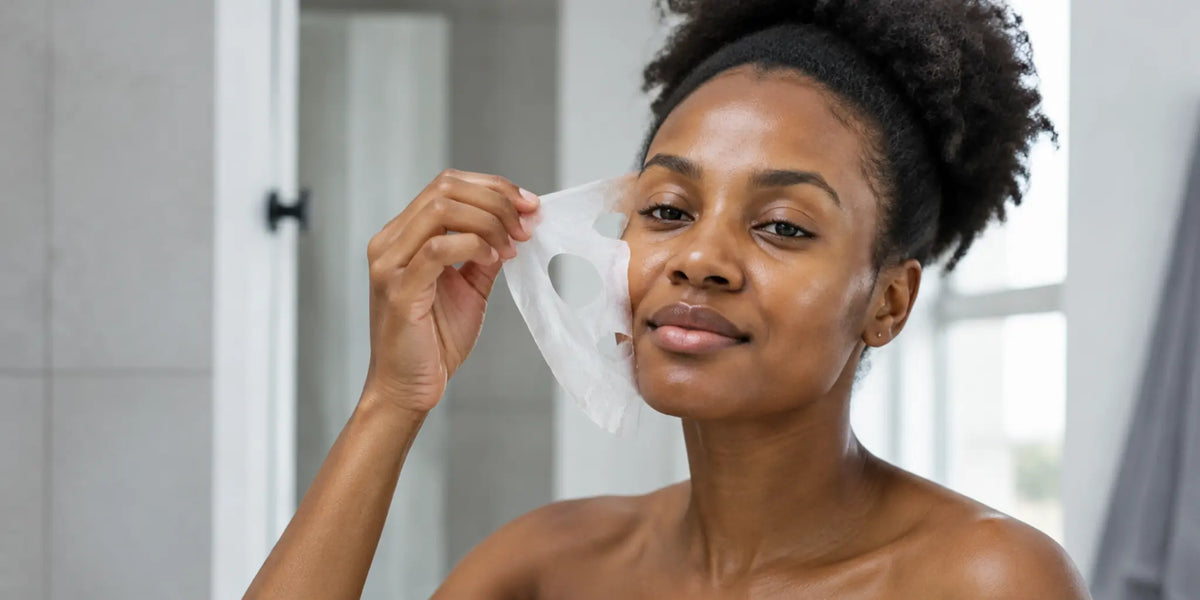
Should You Wash Your Face After a Sheet Mask?
Most leave-on sheet masks do not need to be rinsed off after you remove them, but the package directions decide. If the label says to massage or pat in the remaining essence, leave it on and continue with the next labeled skincare step. If it says to rinse, or if your skin feels unexpectedly itchy, burning, or stinging, remove the mask and wash the product away.
“Sheet mask” describes a format, not one universal formula. A short paper sheet, a two-piece hydrogel mask, and a rinse-off mask can contain very different ingredients and have different wear times. That is why the safest answer starts with the label rather than a social-media rule.
Key Takeaways
- Do not automatically rinse a leave-on sheet mask; follow its directions.
- Cleanse before the mask so it sits on skin without makeup, sunscreen, or visible residue.
- Remove the mask when the labeled time is up instead of waiting for it to dry completely.
- Pat in leftover essence only when the instructions say to leave it on.
- Wash the product away and stop using it if you feel unexpected itching, burning, or stinging.
Should You Rinse After a Sheet Mask?
Usually, no. Many sheet masks are designed as a leave-on step: you remove the material after a set time and let the remaining liquid stay on the skin. Rinsing immediately would remove that leftover formula. Still, some masks are explicitly rinse-off products, and a direction printed on your package is more relevant than the category name.
The FDA’s cosmetics safety guidance tells consumers to read the entire label and follow all directions and warnings. The American Academy of Dermatology’s 2026 facial-mask guidance also recommends choosing a mask for your skin’s needs, checking the ingredient list, and washing it off immediately if itching, burning, or stinging occurs.
| What the label says | What to do after removal |
|---|---|
| “Pat in remaining essence” or “do not rinse” | Gently press in the remaining liquid and continue with the next step listed on the package. |
| “Rinse thoroughly” | Use lukewarm water and avoid scrubbing. |
| Directions are missing or unclear | Do not assume. Check the brand’s official instructions or choose a product with complete labeling. |
| Unexpected itching, burning, or stinging | Remove the mask, wash the product away, discontinue use, and seek qualified guidance if the concern persists. |
| Too much tackiness, but no discomfort | Check the directions first. If it is a leave-on formula, use less additional skincare rather than adding an unlisted rinse step. |
A Simple Sheet Mask Routine
Step 01 — Read the package before opening it
Confirm the wear time, whether the product is leave-on or rinse-off, which side touches the face, and whether the remaining essence should be patted in. Review warnings and the full ingredient panel, especially if you know you react to a fragrance, preservative, dye, or another cosmetic ingredient. The FDA’s cosmetics-labeling overview explains why truthful labeling and clear directions matter.
Step 02 — Wash and dry your hands
Clean hands help keep the mask and its pouch from picking up visible residue. Open a single-use mask only when you are ready to apply it. Do not add water or another skincare product to the pouch, and do not save a used sheet for a second session.
Step 03 — Cleanse your face gently
Remove makeup and sunscreen, wash with lukewarm water and your fingertips, rinse completely, and pat dry. The AAD’s face-washing guidance recommends a gentle, nonabrasive cleanser and advises against scrubbing.

If a daily foam cleanser fits your routine, shop nooni snowflake whipping cleanser. Its current 5.07 fl oz listing directs users to lather a small amount on wet hands, massage it over a damp face and neck for 10–15 seconds, rinse with warm water, and pat dry. The listing says to avoid eye contact and rinse immediately if contact occurs. nooni does not claim that this cleanser changes sheet-mask results or is compatible with every mask formula.
More cleanser or a longer wash is not automatically better. See our guides to how much face cleanser to use and how long to wash your face for a label-led approach.
Step 04 — Apply the mask for the labeled time
Unfold the sheet carefully and align the openings without placing the material over your eyes or lips unless the product is specifically made for those areas. Smooth obvious air pockets with clean fingertips. Set a timer for the stated wear period. Leaving it on much longer does not make every formula more useful, and one product’s timing should not be copied to another.
Step 05 — Remove it gently
Lift the sheet without pulling hard. Dispose of a single-use mask and remaining pouch material as directed. Do not rub the fabric over your face or use it on another person.
Step 06 — Follow the leave-on or rinse-off direction
For a leave-on mask, use clean fingertips to press in the remaining essence if instructed. Let it settle before adding another product. For a rinse-off mask, use lukewarm water and pat dry with a soft towel; our water-temperature guide explains why comfortable lukewarm water is a sensible default.

If the formula feels comfortable but leaves more slip than you want, pause before layering. A smaller amount of moisturizer may be enough, or the mask may already be your final leave-on step for the evening. In the daytime, finish with the sun-protection step that fits your routine. The mask does not replace regular cleansing, moisturizing, or sun protection.
Why Mask Type Changes the Answer
A recent Who What Wear guide published in August 2026 reflects current U.S. interest in Korean sheet and hydrogel formats. That popularity does not make the products interchangeable. The material, amount of liquid, ingredients, and intended wear time vary widely.
A 2026 pilot study indexed by PubMed followed one specific hydrogel formulation in 15 participants after an initial 30-person patch test. It may help researchers understand that exact formula, but it does not establish directions or outcomes for every sheet mask. The FTC’s advertising-substantiation policy is a useful consumer reminder: objective claims should have a reasonable basis before they are advertised.
Common Mistakes to Avoid
- Rinsing by habit: Check whether the product is actually meant to stay on.
- Leaving the sheet on until it is stiff: Use the labeled time instead of inventing a longer session.
- Masking over makeup or sunscreen: Start with clean skin unless the instructions explicitly say otherwise.
- Stacking several strong formulas: Review the ingredients in the mask and the rest of your routine before combining products.
- Ignoring discomfort: Do not push through itching, burning, or stinging for the sake of finishing a timer.
- Reusing a disposable sheet: Follow single-use directions and keep the unopened product stored as labeled.
Bottom Line
Do not rinse after a leave-on sheet mask unless its directions tell you to. Cleanse first, apply the mask for the labeled time, remove it gently, and pat in remaining essence only when instructed. Rinse promptly if the product is labeled rinse-off or causes unexpected discomfort. The format is popular, but the formula and label—not the trend—should decide your routine.
Sources
- American Academy of Dermatology: Do Facial Masks Work, and Should I Add One to My Skin Care Routine?
- U.S. Food and Drug Administration: Using Cosmetics Safely
- American Academy of Dermatology: Face Washing 101
- PubMed: 2026 Hydrogel Facial Mask Pilot Study
- Federal Trade Commission: Advertising Substantiation Policy
- Who What Wear: Best Korean Face Masks in 2026
Related Reading
- What Is K Beauty? Beginner's Guide to Korean Skincare
- How Long Should You Wash Your Face? Is 60 Seconds Necessary?
- Should You Wash Your Face With a Washcloth or Your Hands?
Frequently Asked Questions
Select a question to open the answer.
Should I wash my face after a sheet mask?
Should I wash my face before a sheet mask?
What should I do with leftover essence after a sheet mask?
Can I apply moisturizer after a sheet mask?
What if a sheet mask burns or stings?
Product & Skin Notice
This article is for general informational purposes only. Individual skin types, sensitivities, and results may vary. Always review the product label, ingredient list, directions, and warnings before use. Discontinue use if irritation occurs, and consult a qualified healthcare professional if you have an existing skin condition, known allergies, or persistent concerns.
Read more
Wash your face before applying a pimple patch, then dry the area completely. Learn the right skincare order, wear timing, and safety checks.

Cleanse before a sauna if you wear makeup or sunscreen, then rinse away sweat afterward. Learn a gentle, practical skincare order for your next session.