




Should You Wash Your Face Before or After Facial Waxing?
Wash your face gently before facial waxing, then dry it completely. Clean, dry skin gives wax a simpler surface to grip. After waxing, do not automatically wash again: follow the wax label or your licensed professional’s aftercare directions, and keep friction and very hot water away from the freshly waxed area.
This approach works for common facial areas such as the upper lip, chin, cheeks, and brow perimeter. The exact routine still depends on the wax, the area, and the instructions you were given.
Key Takeaways
- Gently cleanse before facial waxing when makeup, sunscreen, oil, or skin care is present.
- Pat the area fully dry; the American Academy of Dermatology says clean, dry skin helps wax adhere.
- Do not add lotion or face oil before waxing unless the wax directions specifically call for it.
- Afterward, skip scrubbing and follow the kit or professional’s instructions before cleansing again.
Why Washing Before Facial Waxing Makes Sense
The goal is not to make skin feel squeaky. It is to remove the surface layer of makeup, sunscreen, excess oil, and other products that may sit between the hair and the wax. In its current at-home waxing guidance, the American Academy of Dermatology recommends gently washing the area and drying it thoroughly before waxing.
Drying matters as much as washing. Water left around the upper lip, chin, or brows can interfere with the clean, dry starting point described by the AAD. Use a fresh, soft towel and press rather than rub.
Facial waxing and shaving are not interchangeable. Wax removes hair from the root, while shaving cuts it at the surface, as explained in this Cleveland Clinic comparison. That difference is why a routine built for shaving should not automatically be applied to wax.
Before or After? Use This Quick Guide
| Situation | Practical choice | Why |
|---|---|---|
| You have makeup, sunscreen, lotion, or oil on the area | Wash before waxing | Start with a clean surface, then pat completely dry. |
| Your face is already clean but still damp | Do not add more cleanser; finish drying | The waxing surface should be clean and dry. |
| You are going to a salon appointment | Follow the studio’s prep directions | The professional knows the wax and procedure they use. |
| You have just finished waxing | Do not default to another wash | Extra heat and rubbing can add unnecessary friction. |
| You need to wash later | Use clean hands and lukewarm water if aftercare allows | A gentle, low-friction routine is the simpler option. |

How to Prepare Your Face for Waxing
Step 01 — Read the wax directions first
Check the intended facial area, temperature instructions, warnings, and required prep. The FDA’s consumer cosmetics guidance emphasizes reading labels, following directions, heeding warnings, and washing hands before cosmetic use.
The AAD also advises avoiding over-the-counter retinol products and prescription retinoids for two to five days before waxing the face. If a prescription product is part of your routine or you are unsure whether waxing is appropriate, ask the prescriber and the waxing professional before proceeding.
Step 02 — Wash your hands
Clean hands keep the prep routine simple, especially because you will touch small areas around the mouth, chin, cheeks, or brows. Dry your hands before handling a wax strip or applicator.
Step 03 — Use a gentle wash
Wet the face with lukewarm water and use your fingertips instead of a textured scrubber. The AAD’s face-washing guidance recommends a gentle, non-abrasive cleanser and fingertip application.
If you use nooni snowflake whipping cleanser, the current 5.07 fl oz product directions say to lather a small amount on wet hands, gently massage a damp face and neck for 10–15 seconds, rinse with warm water, and pat dry. The label also says to avoid eye contact and rinse immediately with water if contact occurs. These are cleanser directions, not a promise about wax adhesion or post-wax compatibility.
Step 04 — Rinse, then pat fully dry
Remove visible lather and press the skin dry with a clean towel. Check creases beside the nose, the upper-lip area, and the brow perimeter. If you want a broader temperature guide, see Cold or Warm Water for Washing Your Face?
Step 05 — Keep the surface product-free
Do not add moisturizer, face oil, primer, or sunscreen to the target area between washing and waxing unless the wax maker or licensed professional tells you to. This is a short preparation window, not a permanent change to your routine.
Step 06 — Pause if the area is not suitable
Do not wax sunburned or very sensitive skin. The AAD also says not to wax if you have taken isotretinoin in the previous six months. When in doubt, stop and ask a qualified professional rather than improvising with a new product or stronger technique.

How to Wash Your Face After Facial Waxing
Immediately after waxing, your first source of truth is the wax label or your professional’s aftercare. If they provide a residue-removal cloth or a specific step, use it exactly as directed. Do not assume that any face wash will dissolve every wax formula.
If you need to cleanse later and the instructions allow it, keep the routine low-friction:
- Wash and dry your hands.
- Use lukewarm rather than very hot water.
- Move your finger pads lightly over the face; do not scrub the waxed area.
- Rinse thoroughly and pat dry with a clean towel.
- Apply only the aftercare products recommended for that wax and your skin.
The AAD’s waxing guidance advises avoiding hot baths and showers immediately afterward and suggests a cool pack when there is discomfort. For a facial area, keep any cool pack wrapped in clean fabric and avoid pressing hard.
Common Facial-Waxing Prep Mistakes
Waxing over a product layer
Makeup, sunscreen, lotion, and oil can leave the area less than fully clean and dry. Remove them gently before the session.
Scrubbing right before waxing
A gritty scrub, rough cloth, or cleansing brush adds friction just before another friction-heavy step. Choose a gentle fingertip wash.
Skipping the temperature check
For warmed wax, follow the package directions and test the temperature as instructed. Do not judge only by appearance.
Using a body-wax routine on the face
Use only a product labeled for the intended facial area. A July 7, 2026 Allure guide to at-home waxing kits reflects current interest in face-specific options, but its product recommendations do not replace the directions on your own wax.
Adding unplanned products afterward
More is not automatically better. Use the provided or professionally recommended aftercare and avoid testing several unfamiliar products at once.
At Home or With a Professional?
A salon visit can be the clearer choice when the area is hard to see, you have never waxed before, or your current skin-care routine makes the instructions difficult to interpret. Tell the professional what topical and prescription products you use. For at-home waxing, keep hands, tools, and containers clean; the FDA notes that clean containers and clean hands are basic parts of cosmetic hygiene.
Be skeptical of claims that a prep product guarantees painless waxing, perfect adhesion, or a particular skin outcome. The FTC’s advertising substantiation policy explains that objective product claims need a reasonable basis before they are communicated.
Bottom Line
For most facial-waxing routines, wash first and dry completely. Afterward, do not automatically cleanse a second time. Follow the wax label or your professional’s directions, minimize heat and friction, and use a gentle wash later only when those instructions allow it.
Sources
- American Academy of Dermatology: Hair removal—How to wax
- American Academy of Dermatology: Face washing 101
- Cleveland Clinic: Shaving vs. waxing
- U.S. Food and Drug Administration: Using Cosmetics Safely
- U.S. Food and Drug Administration: Microbiological Safety and Cosmetics
- Federal Trade Commission: Advertising Substantiation Policy Statement
- Allure: At-Home Waxing Kits, July 7, 2026
Related Reading
- Should You Wash Your Face Before or After Shaving?
- Should You Wash Your Face Before or After Eyebrow Threading?
- Should You Wash Your Face Before a Makeup Appointment?
Frequently Asked Questions
Select a question to open the answer.
Should I wash my face before facial waxing?
Yes. Gently wash away makeup, sunscreen, oil, and other skin-care products, then pat the area completely dry before waxing.
Can I wash my face immediately after facial waxing?
Do not make an immediate second wash the default. Follow the wax label or your professional’s aftercare directions, and avoid unnecessary heat and rubbing.
Should I moisturize before facial waxing?
Not on the target area unless the wax directions or your professional specifically say to. The AAD recommends a clean, fully dry surface before waxing.
Can face wash remove leftover facial wax?
Do not assume it can. Different waxes use different residue-removal steps, so follow the kit instructions or professional guidance instead of scrubbing.
What skin-care products should I pause before facial waxing?
The AAD advises avoiding over-the-counter retinol products and prescription retinoids for two to five days before waxing the face. Ask the prescriber and waxing professional if you are unsure about any product.
Product & Skin Notice
This article is for general informational purposes only. Individual skin types, sensitivities, and results may vary. Always review the product label, ingredient list, directions, and warnings before use. Discontinue use if irritation occurs, and consult a qualified healthcare professional if you have an existing skin condition, known allergies, or persistent concerns.
Read more

Wash before a makeup appointment when needed, then arrive clean and product-light. Use this gentle prep routine without over-cleansing your skin.
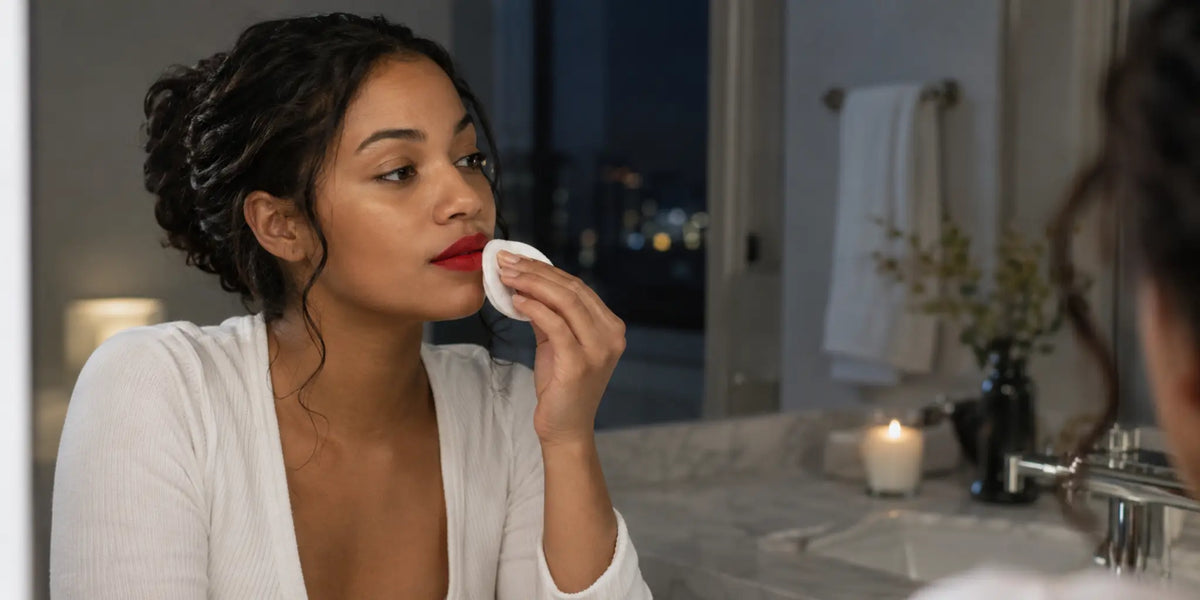
Learn how to remove red lipstick without scrubbing, choose a lip-compatible remover, limit friction, and finish with simple, comfortable lip care.