



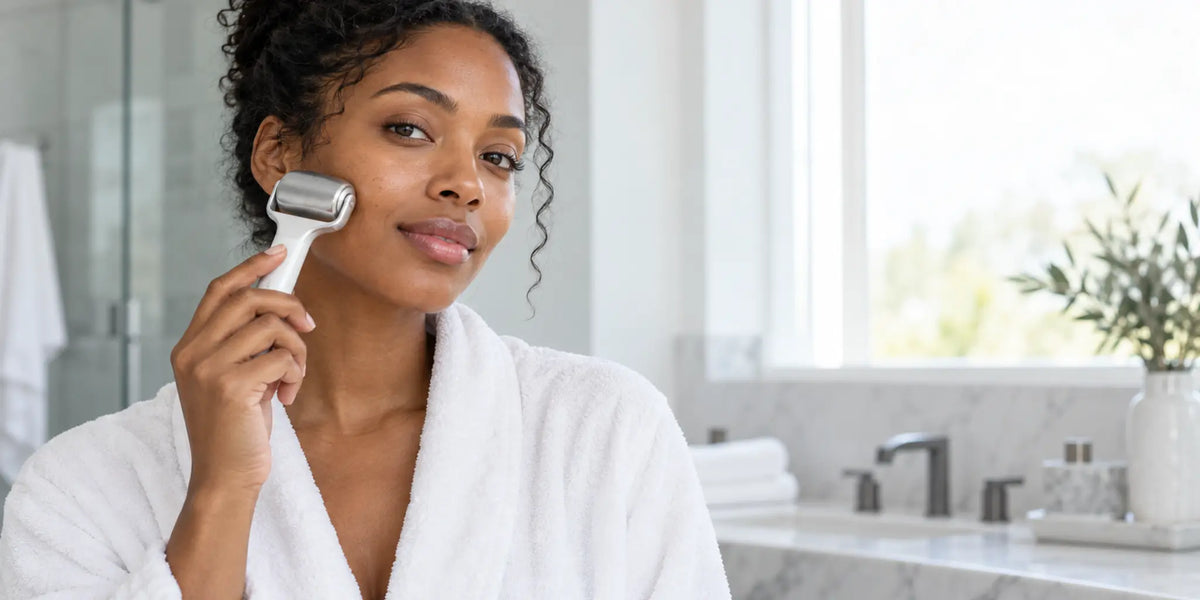
Should You Wash Your Face Before Using an Ice Roller?
Yes—wash your face before using an ice roller when you have makeup, sunscreen, sweat, or visible residue on your skin. If your face is already clean, another full cleanse may be unnecessary. Start with a clean roller, follow its own temperature and timing directions, and keep the pressure light.
Ice rollers have moved from a niche fridge-door tool into a broader 2026 cooling-skin-care conversation. Byrdie identified cryo-inspired cooling formats as a K-beauty trend to watch, while a CVS guide updated July 27, 2026 places ice rolling on clean skin and emphasizes product-specific directions. That makes the useful question less “Does everyone need a special prep?” and more “What is actually on my face right now?”
Key Takeaways
- Cleanse first if you are wearing makeup, sunscreen, or have sweat or residue on your face.
- Skip an extra wash when your skin is already clean and another cleanse would only repeat your routine.
- Use a clean, undamaged roller and follow its maker’s cooling, cleaning, and contact-time directions.
- Keep the tool moving with light pressure, and stop if the cold feels painful, numb, or sharply uncomfortable.
The Short Answer: Clean Skin, Not Automatically More Cleansing
A clean starting surface helps keep yesterday’s makeup, today’s sunscreen, and whatever is on the roller from becoming one mixed layer. It also lets you see how your skin responds to the cold without confusing that response with leftover product.
But “clean skin” does not always mean “wash again.” The American Academy of Dermatology’s face-washing guidance recommends a gentle, non-abrasive cleanser, lukewarm water, fingertip application, and no scrubbing. It also advises limiting face washing to twice daily and after heavy sweating. If you cleansed recently and have not added makeup, sunscreen, or sweat, simply confirm that both your skin and roller are clean.
| What is on your skin? | Best next step | Why |
|---|---|---|
| Makeup or tinted base | Remove it, then cleanse as your product label directs. | A roller is not a makeup-removal tool. |
| Sunscreen or a full daytime routine | Follow your normal evening cleansing routine first. | Rolling over layered residue is unnecessary. |
| Heavy sweat | Gently wash and pat dry. | AAD recommends washing after heavy sweating. |
| Recently cleansed, bare skin | Do not automatically cleanse again. | Clean skin is the goal; repeated washing is not. |
| Fresh serum or moisturizer | Check the roller maker’s directions. | Some tools are intended for bare skin; others may allow slip products. |

How to Prep for an Ice Roller
Step 01 — Read the roller directions
Ice rollers vary. Some are stored in a refrigerator, some in a freezer, and some use a removable or fillable head. The maker’s directions should decide the storage temperature, wait time, cleaning method, and how long the tool touches your skin. Do not copy a timing rule from a different device.
Step 02 — Check your skin and the tool
Pause if the roller is cracked, leaking, rough, or difficult to turn. Do not roll over broken skin or an area that already feels unusually sore or sensitive. If you have an existing skin condition, recent procedure, reduced temperature sensation, or a specific concern about cold exposure, ask a qualified healthcare professional before adding the tool.
Very cold surfaces deserve respect. Cleveland Clinic’s current overview of cold-related skin burns explains that intense cold can injure skin and that direct contact with ice or freezing metal can be a cause. An ice roller is not the same as pressing loose ice onto your face, but the principle is useful: follow the tool’s instructions, do not improvise with extreme temperatures, and do not park it in one spot.
Step 03 — Cleanse only if needed
If makeup, sunscreen, sweat, or residue is present, use your usual face-cleansing method. The nooni snowflake whipping cleanser is currently a rinse-off daily foam cleanser for light makeup, impurities, and sebum. Its official directions say to lather a small amount on wet hands, massage a damp face and neck for 10–15 seconds, rinse with warm water, and pat dry. Avoid the eye area and rinse immediately if contact occurs.
This cleanser is not a cleaner for the roller, a cooling gel, or a substitute for any slip product named by the device maker. It is also not positioned as universally compatible with every ice roller. Use it only as a rinse-off facial cleanser and follow the roller’s separate instructions.
Step 04 — Dry your face and confirm the roller is clean
Pat rather than rub. Then inspect the roller head. If its directions call for washing before use, clean and dry it exactly as instructed. A tool that touches the face should not carry visible residue from a previous session.

Step 05 — Test briefly, then keep moving
Start on a small area with light pressure. The sensation should feel cool, not painful. Glide instead of holding the roller still, and stay away from the eyelids unless the product is expressly designed and labeled for that area. Stop if you notice pain, numbness, strong stinging, or an unusual color change.
Step 06 — Finish the routine without piling on extra steps
Afterward, follow the rest of your normal routine and the roller maker’s order. The FDA’s cosmetic-safety guidance says to read labels, follow directions and warnings, wash hands before use, and keep containers clean and closed. Those basics matter more than adding a long list of “ice-rolling” products.
If you want to shop within the current cleansing category, explore nooni skin care and check each label for your routine. That is the article’s only product CTA.
What an Ice Roller Should Not Replace
An ice roller is not a cleanser, makeup remover, sunscreen, moisturizer, or professional evaluation. Cooling claims can also be easy to overstate. The FTC’s advertising-substantiation policy requires a reasonable basis for objective express and implied claims. For that reason, this guide does not promise lasting facial reshaping, certain results, or a universal outcome.
Think of ice rolling as an optional sensory step. If you enjoy the cool feeling and your tool’s directions fit your routine, use it carefully. If you dislike it, your skin-care routine is not incomplete.
Common Mistakes to Avoid
- Rolling over makeup: remove makeup first instead of using the tool to push it around.
- Washing repeatedly: do not add another cleanse simply because a tool is next.
- Using an unclean roller: clean it according to the product directions after each use and before storing.
- Holding the cold head still: keep it moving and respect the maker’s time limit.
- Borrowing another tool’s directions: an ice globe, metal wand, gel roller, and fillable roller may require different handling.
- Turning a temporary routine step into a big promise: assess appearance claims cautiously and prefer specific, supported instructions.
Bottom Line
Wash your face before an ice roller when you need to remove makeup, sunscreen, sweat, or residue. If your skin is already clean, skip the automatic extra cleanse. Use a clean roller, light pressure, and the exact storage and timing directions for your tool. The simplest sequence is usually the most reliable: assess, cleanse if needed, pat dry, roll briefly, clean the tool, and move on.
Sources
- Byrdie: 2026 K-beauty ingredients and cryo-inspired cooling formats
- CVS: Using an ice roller, updated July 27, 2026
- American Academy of Dermatology: Face washing 101
- Cleveland Clinic: Ice burns, updated April 8, 2026
- FDA: Using Cosmetics Safely
- FTC: Advertising Substantiation Policy Statement
Related Reading
- Should You Wash Your Face Before Using a Microcurrent Device?
- How to Use a Facial Cleansing Brush: A Gentle Step-by-Step Guide
- Should You Wash Your Face Before or After Facial Steaming?
Frequently Asked Questions
Select a question to open the answer. Select it again to close.
Can I use an ice roller on a face that was just cleansed?
Yes, if the roller is clean and its directions allow use on clean, dry skin. Pat your face dry and follow the tool’s storage, temperature, and timing instructions.
Do I need to wash my face twice before ice rolling?
No. Cleanse once as needed to remove makeup, sunscreen, sweat, or residue. If your face is already clean, another wash may be unnecessary.
Can I use face cleanser to clean the ice roller?
Only if the roller maker allows it. A facial cleanser is formulated for skin, not automatically for tool materials, seams, or internal parts. Follow the roller’s cleaning directions.
Should I apply serum before or after an ice roller?
Check your roller’s instructions. Some tools are intended for clean, dry skin, while others may allow a compatible slip product. Do not assume one order fits every roller.
How often should I clean an ice roller?
Follow the manufacturer’s directions and clean visible residue after use. Let the tool dry as directed before storage, and do not share it unless the maker provides a safe cleaning method.
Product & Skin Notice
This article is for general informational purposes only. Individual skin types, sensitivities, and results may vary. Always review the product label, ingredient list, directions, and warnings before use. Discontinue use if irritation occurs, and consult a qualified healthcare professional if you have an existing skin condition, known allergies, or persistent concerns.
Read more

Wash before using a microcurrent device, dry fully, and follow its gel and safety directions. Here’s a calm, simple, label-first skin-prep routine.

Brush your teeth before applying a lip mask so toothpaste and rinsing do not disturb the layer. Follow a simple, label-first nighttime order.