



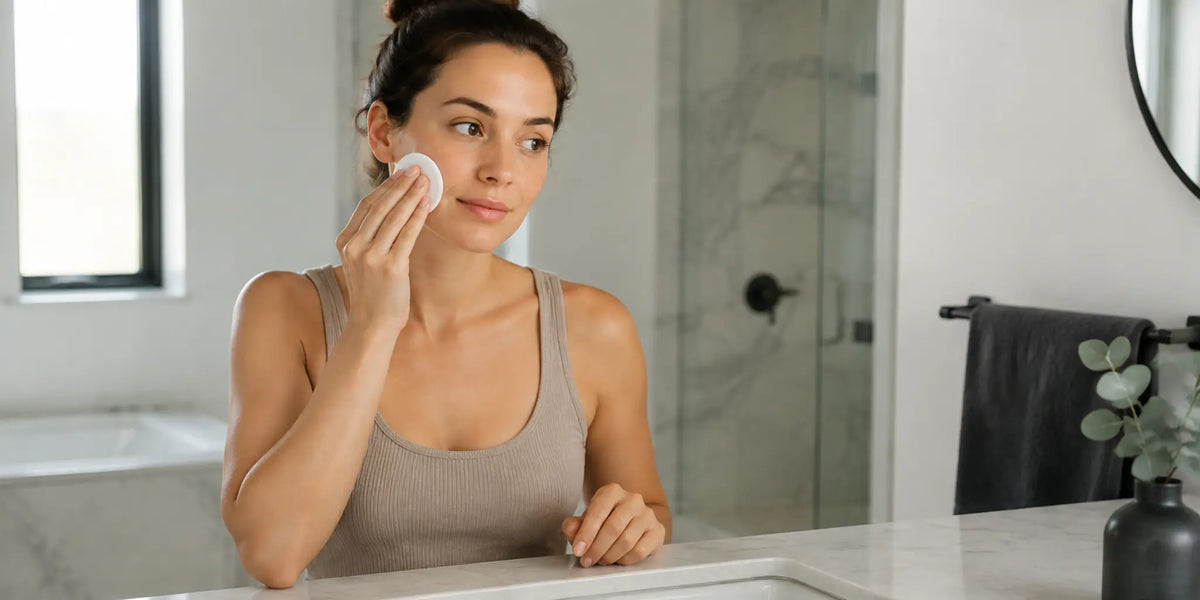
Do You Need to Wash Your Face After Micellar Water?
You do not always need to wash your face after micellar water. If its current label says it is a no-rinse cleanser and it fully removes what you wore, you can usually continue with the rest of your routine. Follow with a gentle face wash when the label directs you to rinse, when sunscreen or heavy makeup remains, or when your skin still feels coated.
Key Takeaways
- Start with the micellar-water label because formulas and directions vary.
- A no-rinse formula may be enough for a light, straightforward cleanse.
- Sunscreen and heavy or waterproof makeup may call for another gentle cleansing step.
- Use enough liquid to wet the pad and glide lightly instead of scrubbing.
- More cleansing is not automatically better; stop when skin feels clean and comfortable.
Why Micellar Water Does Not Always Need a Rinse
Micellar water is a water-based cleanser made with small clusters of cleansing molecules called micelles. Those molecules help lift dirt, oil, and makeup from the surface so they can be carried away on a pad or cloth. It is not simply plain water, even though the texture can feel similarly light.
In an updated guide dated August 7, 2026, Cleveland Clinic explains that micellar water typically does not need to be rinsed off. The same guide adds an important qualifier: sunscreen, cosmetics, and especially heavy or waterproof makeup may require a follow-up oil- or water-based cleanser.
That distinction is timely. A Who What Wear review published August 23, 2026 evaluated micellar waters as both no-rinse cleansers and first steps before a conventional face wash. The practical lesson is not that one method wins. It is that the correct finish depends on the formula, what is on your face, and how your skin feels after use.
Should You Rinse or Follow With Face Wash?
| Situation | Practical next step | Why |
|---|---|---|
| Label says no rinse; little or no makeup | Continue with the rest of your routine | The micellar step may be sufficient |
| Sunscreen or regular makeup remains | Use a gentle cleanser if needed | A second step can remove remaining product |
| Heavy or waterproof makeup | Follow the remover label, then cleanse gently | Micellar water may not remove everything in one pass |
| Skin feels coated or uncomfortable | Rinse or use a gentle wash, then reassess | Comfort is a useful signal to simplify or adjust |
| Label specifically says to rinse | Rinse as directed | The product instructions take priority |
How to Use Micellar Water Without Over-Cleansing
Read the Current Label and Wash Your Hands
Step 01
Check whether your formula is intended for the face, eyes, or both, whether it says no rinse, and whether it has any warnings. The FDA advises reading cosmetic labels, following directions, and washing your hands before application. Do not assume that directions from a different bottle apply to yours.
Wet the Pad Enough to Reduce Drag
Step 02
Apply enough micellar water to evenly dampen a clean cotton pad or reusable cloth. A nearly dry pad creates more friction and encourages repeated rubbing. Keep the container opening and cap clean, and never add water or saliva to change the product.
Press Briefly, Then Sweep Lightly
Step 03
Place the damp pad against one area for a moment, then sweep with light pressure. Turn to a clean section as makeup transfers. Around the eyes, follow only a formula labeled for that area and avoid getting product into the eye. The FDA’s eye-cosmetic guidance says to stop using an eye-area cosmetic if it causes discomfort and to keep applicators and containers clean.

Decide Whether One More Cleanse Is Useful
Step 04
Look at the pad, check the hairline and jaw, and notice how your skin feels. If the no-rinse product removed a light day’s buildup and your skin feels comfortable, you may be done. If sunscreen, foundation, or residue remains, use one gentle follow-up wash. The Cleveland Clinic notes that double cleansing can help with waterproof makeup and sunscreen but is not necessary for everyone.
Rinse the Follow-Up Cleanser Completely
Step 05
Use lukewarm water and your fingertips, then rinse fully and pat dry. The American Academy of Dermatology recommends a gentle, non-abrasive cleanser, lukewarm water, and no scrubbing. Avoid repeating the cycle just because another pad shows a faint trace of color; excessive cleansing can leave skin feeling tight or uncomfortable.

When Micellar Water Alone May Be Enough
A no-rinse micellar water may be enough in the morning, after a light makeup-free day, or when its label says it can stand alone and the result feels comfortable. Use a fresh pad as needed, but do not chase a perfectly white pad through repeated passes. Natural skin oils and trace color can remain without meaning that the face is unclean.
If you are traveling or do not have easy sink access, a labeled no-rinse formula can also be practical. Keep the bottle closed, avoid sharing pads or cloths, and use clean hands. The FDA’s cosmetic microbiological-safety guidance emphasizes clean containers and proper storage because contamination can arise through consumer use.
When a Gentle Face Wash Makes Sense
Consider another cleanse when you wore sunscreen, foundation, long-wear color, or waterproof makeup; when the micellar label directs you to rinse; or when your skin still feels coated. Another step can also make sense if you used several pads without removing visible product. That is different from washing twice by habit every night.
If you are choosing between remover types, the guide to oil-based makeup remover versus oil cleanser explains how their intended roles differ. For days with sunscreen, see the routine for removing sunscreen at night without over-cleansing.
Where a nooni Face Wash Fits
Shopify currently lists nooni Snowflake Whipping Cleanser as Active and available. The current product information identifies it as a 5.07 fl oz. daily foam cleanser designed to remove light makeup, impurities, and sebum. Directions say to lather a small amount on wet hands, massage it over a damp face and neck for 10–15 seconds, rinse with warm water, and pat dry.
Important limitation: the product page does not say that a second cleanse is required after every micellar water or that it removes waterproof makeup. It also says to avoid contact with the eyes. Use it only when a follow-up wash suits what you wore and follow the current package directions and precautions.
Common Micellar-Water Mistakes
- Ignoring the label: “Micellar water” describes a category, not one universal formula.
- Scrubbing with a dry pad: add enough liquid to reduce drag and use light pressure.
- Assuming one pass removes waterproof makeup: use an appropriate remover and follow its directions.
- Automatically washing again: double cleansing is a tool, not a nightly requirement.
- Reusing dirty cloths: start with a clean pad or freshly washed reusable cloth.
Bottom Line
You do not have to wash your face after every micellar-water cleanse. Let the label, what you wore, and the result guide you. A labeled no-rinse formula may be enough for a light cleanse. Follow with one gentle face wash when sunscreen, heavy makeup, or residue remains, then stop. The goal is a clean, comfortable face—not the maximum possible number of cleansing steps.
Sources
- Cleveland Clinic: Micellar Water—What It Is and How To Use It
- Who What Wear: The Best Micellar Waters of 2026
- Cleveland Clinic: Double Cleansing Method Explained
- American Academy of Dermatology: Face Washing 101
- FDA: Using Cosmetics Safely
- FDA: Eye Cosmetic Safety
- FDA: Microbiological Safety and Cosmetics
Related Reading
- Double Cleansing: Do You Need It Every Day?
- Should You Wash Your Face With a Washcloth or Your Hands?
- How Long Should You Wash Your Face? Is 60 Seconds Necessary?
Frequently Asked Questions
Select a question to view the answer.
Do you need to wash your face after micellar water?
Not always. If the label says no rinse and the micellar water removes what you wore, you can continue with your routine. Use a gentle follow-up cleanser when product remains or the label directs you to rinse.
Can you leave micellar water on your face overnight?
You can leave on a formula labeled as no rinse if your skin feels comfortable. Rinse or cleanse again when its directions require it or when residue remains.
Does micellar water count as washing your face?
Yes, micellar water is a type of facial cleanser. Whether it is enough by itself depends on its directions and whether you need to remove sunscreen, heavy makeup, or waterproof products.
Should you double cleanse after micellar water?
Double cleansing is optional. It can be useful when sunscreen or makeup remains, but a second cleanse is not automatically necessary after every use.
Can micellar water remove waterproof makeup?
Some formulas are labeled for waterproof makeup, but ordinary micellar water may need several passes or another suitable remover. Check the current label and avoid hard rubbing.
Product & Skin Notice
This article is for general informational purposes only. Individual skin types, sensitivities, and results may vary. Always review the product label, ingredient list, directions, and warnings before use. Discontinue use if irritation occurs, and consult a qualified healthcare professional if you have an existing skin condition, known allergies, or persistent concerns.
Read more
Learn whether lip oil goes before or after lipstick, how to add shine without blurring the edges, and when keeping the products separate works better.

Wash your face after shampoo and conditioner to clear hair-product residue. Follow a simple hair-first shower order and gentle cleansing steps.